EV Technology Briefing — compiled and curated by Chris Lee
Solid-state cells edge toward trial production while regulators write rules for chargers, recalls, and city driving
Week of October 27 – November 3, 2026
Five stories this week. Two Chinese makers report new solid-state cell numbers, and all of it is company data. The UK wants cybersecurity standards for public chargers. A German research project prices bidirectional charging for trucks. A court looks at EU product-safety law after a battery recall, and a UN rule could open city streets to Level 2 assist.
Solid-State Batteries
CATL moves 20 Ah solid-state cells into trial production while Sunwoda claims 400 Wh/kg
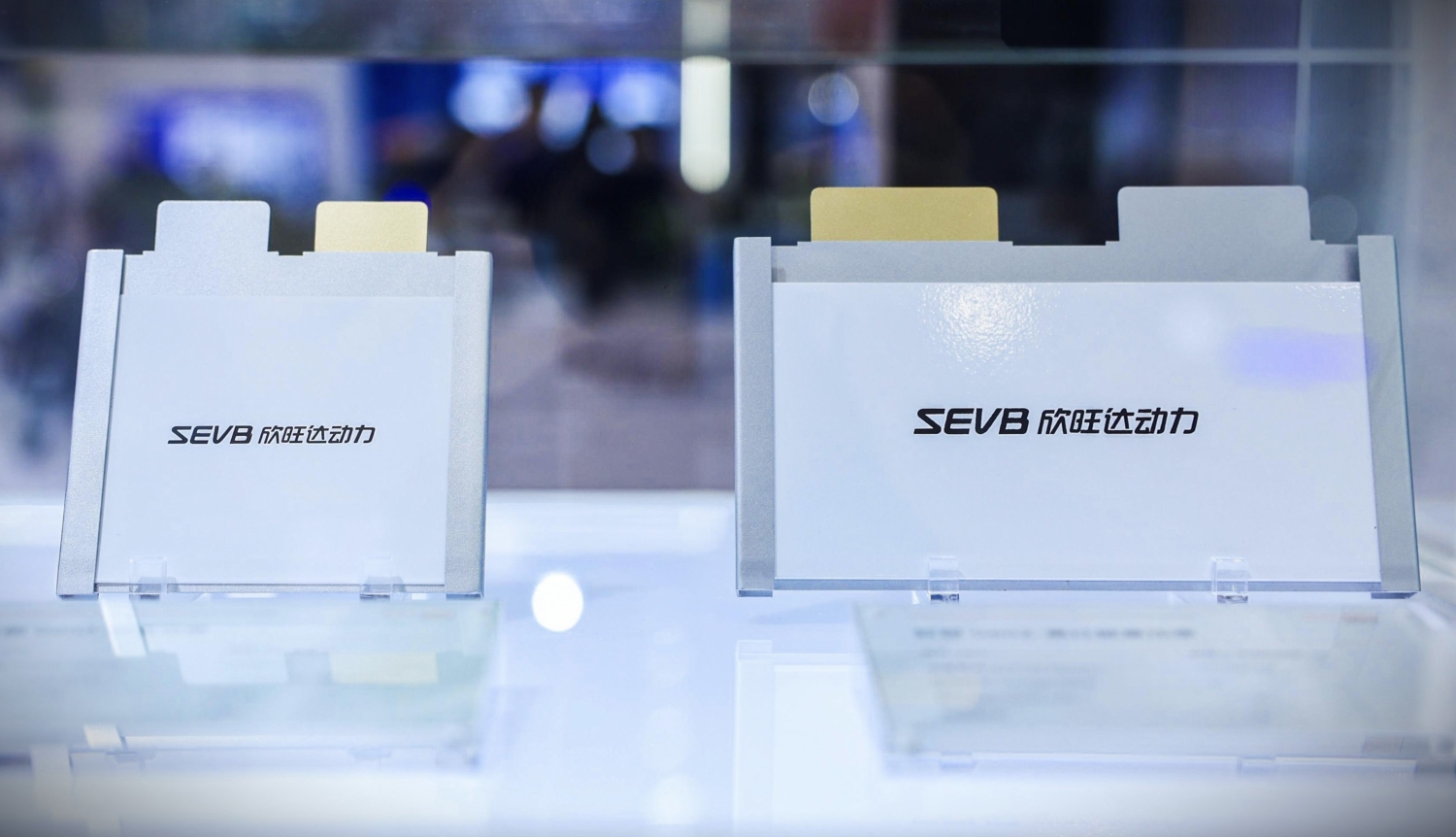
Sunwoda (SEVB) solid-state pouch cells. Credit: China Tech, via CarNewsChina
Electrek reported on October 28 that CATL's sulfide-based all-solid-state cells have entered trial production at 20 Ah, with 500 Wh/kg as the target. Electrek's source is Autohome, which draws on CATL's answer to investors. CATL expects small-scale production in 2027 with limited output at first, and mass production around 2030. CarNewsChina points out that a 20 Ah CATL prototype was already reported in 2024. The news is the step into trial production and a repeated 2027 date, not a new cell.
Sunwoda (SEVB) added numbers on October 30 in a disclosure on the Shenzhen Stock Exchange investor platform. Its 20 Ah polymer-composite cell, called Xin Bixiao, is rated at 400 Wh/kg and more than 1,200 cycles. It uses a 12-micron polymer-composite membrane and a nanoscale high-entropy silicon anode, and it reportedly passed a 200°C hot-box test. Design and process verification are done. Customers are evaluating it, but Sunwoda named no automaker and no sample volumes.
The sub-1 MPa figure deserves a second look. Sunwoda says the cells reach 1,200 cycles under external pressure below 1 MPa. Stack pressure adds hardware at the pack level, so a lower number helps. It is a company claim with no independent test behind it. Sunwoda has a pilot line with 0.2 GWh of annual design capacity. It lists a second-generation sulfide cell for 2027 and a cell above 500 Wh/kg for 2030, both as targets.
Cost is the other gate. CarNewsChina cites Shanghai Metals Market at roughly 3,500 to 4,500 yuan/kg for the sulfide electrolyte Li6PS5Cl, against 30 to 50 yuan/kg for conventional liquid electrolytes. Every energy-density number in this story comes from the companies. None has been verified outside them.
The UK proposes mandatory cybersecurity rules for public EV chargers
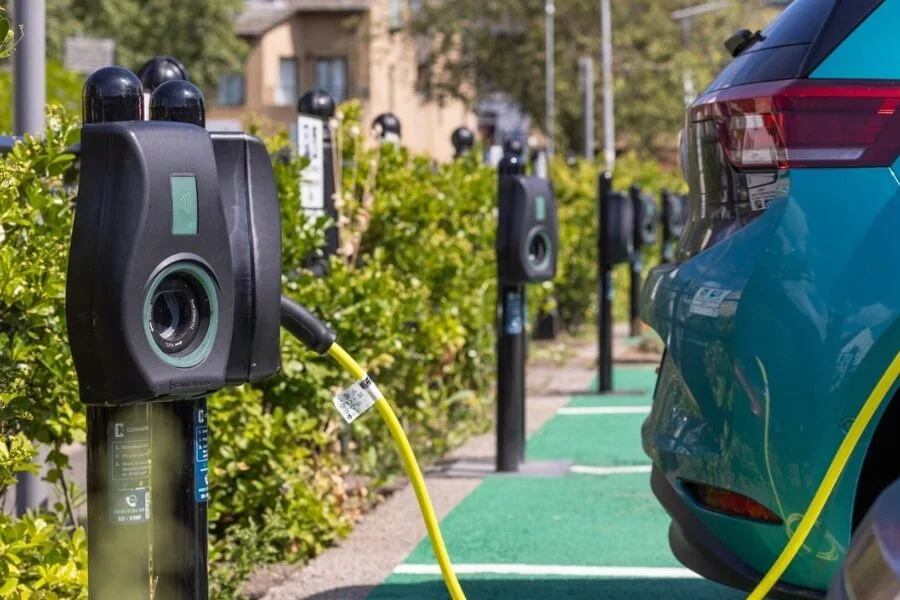
A Connected Kerb charge point in the UK (2023 file photo). Credit: Connected Kerb, via electrive
The UK Department for Transport opened a consultation on November 2 on cybersecurity for public charge points. It says public chargers have no specific cybersecurity requirements today. The 2021 Smart Charge Points Regulations cover only home and small non-domestic units. The consultation closes December 20, 2026.
The DfT proposes ETSI EN 303 645 as the baseline. That standard covers authentication, secure software updates, and vulnerability management for connected devices. The department is also weighing the European standard EN 18031 as an equivalent route, so manufacturers can avoid separate UK and EU paperwork.
The proposal goes beyond software. It adds physical anti-tamper measures: protective seals, sensors that detect unauthorized access, and alerts when internal components are opened. It also requires meters that meet the Measuring Instruments Regulations 2016 at Class B accuracy, within 2 percent, to cut meter tampering and fraud.
The rules would apply to newly sold or installed public chargers. Existing equipment would not need retrofitting, but replacement units would have to comply. A possible second phase would cover charge point operators and e-mobility service providers. The DfT names two risks: a direct attack on a charger, and a compromised charger used to reach other parts of the network.
SPIRIT-E puts numbers on bidirectional charging for heavy trucks
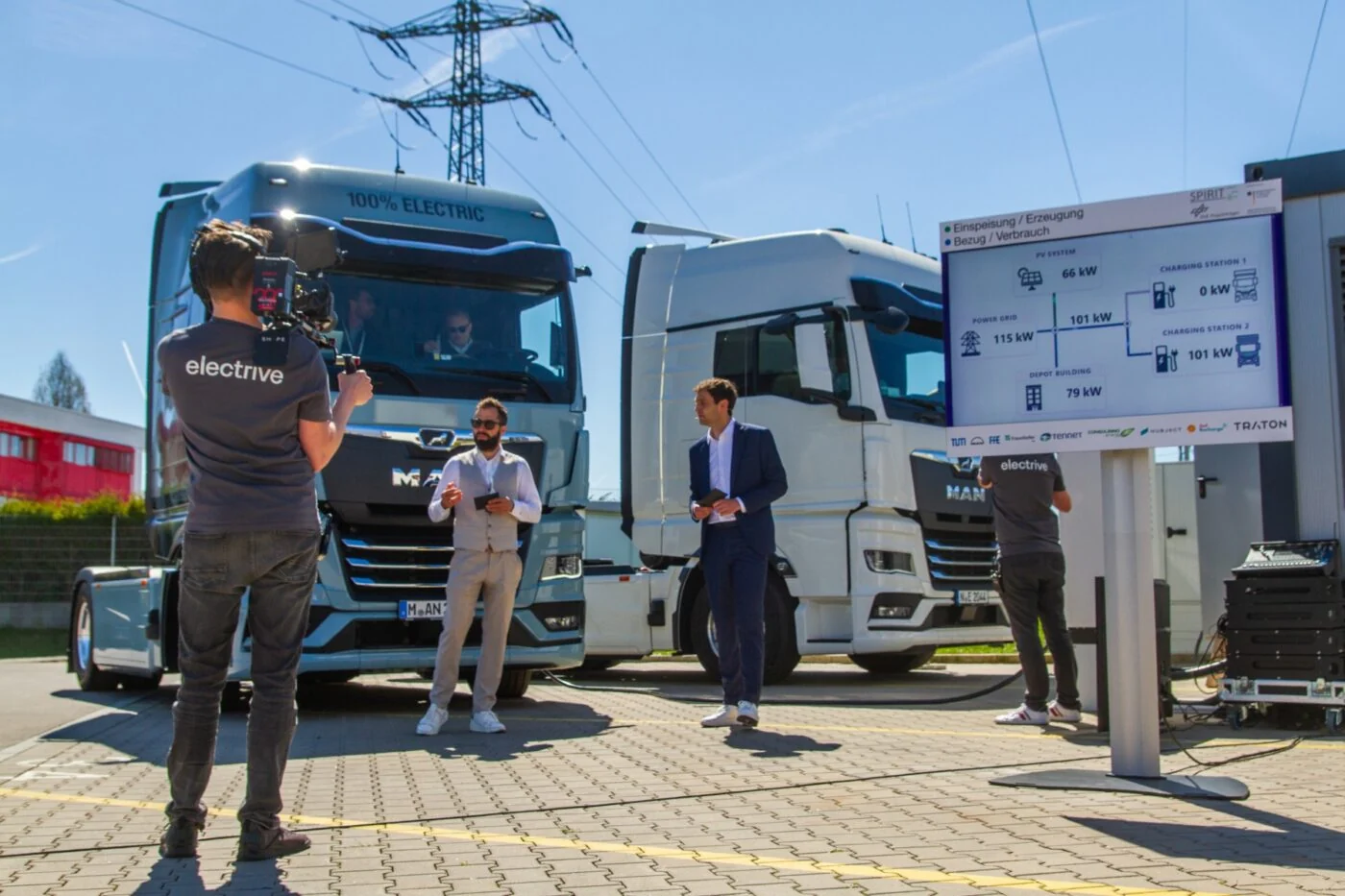
A MAN eTGX during the SPIRIT-E bidirectional charging demonstration. Credit: MAN, via electrive
SPIRIT-E, a German federally funded project led by DLR, wrapped up in October after running since August 2023. It studied whether heavy-duty trucks can serve as storage for depots and the grid. The test site was a real-world lab at the Schmid logistics company near Regensburg. electrive reported the closing results on October 31.
The hardware demo came in spring 2026. A MAN eTGX with 480 kWh of usable battery fed up to 350 kW back into the grid through a bidirectional DC charger from Shell Business Recharge Solutions. The project tested vehicle-to-vehicle, vehicle-to-site, and vehicle-to-grid use. Communication ran on ISO 15118-20.
The economics rest on driving data from six German heavy-duty fleets, 2.15 million km in total. Reserving public chargers on long-haul routes cost about 1 to 4 percent in time compared with diesel trucks, as a median that depends on the scenario. A depot with solar and battery storage saved 25 to 44 percent more than simply switching to electric trucks. Grid and market integration cut total costs by 1.7 ct/km on average, and 6.1 ct/km with bidirectional charging.
The realistic energy-cost saving is about 10 percent. electrive's example: a truck driving 100,000 km a year ends up with the energy cost of 90,000 km. The barriers left are grid-connection capacity, economics, and the lack of uniform standards for selling stored power. Revenue sharing among carriers, OEMs, and electricity marketers is also unresolved. Partners included TUM, Fraunhofer IEE, FfE, TenneT, Hubject, Consolinno Energy, and MAN Truck & Bus.
A German court points to EU product-safety law in a battery-recall refund case
Production of the Cupra Born at VW in Zwickau (2021). Credit: Volkswagen, via electrive
The Offenburg Regional Court (case 2 O 356/25) has given a preliminary assessment in a suit over a Cupra Born. The owner wants to rescind the purchase. The car falls under recall campaign 93S4 for potentially faulty battery modules, which can cut range, trigger a warning light, and carry a fire risk. The recall was announced in March 2026 and covers about 94,000 vehicles: 74,579 Volkswagen Group cars and 19,452 Cupra Borns. The defendants, the seller and Seat as manufacturer, have until November 6 to respond.
The legal hook is Article 37 of EU Regulation 2023/988, the General Product Safety Regulation. It covers remedies after a recall. Companies should normally offer at least two of repair, replacement, or refund. A refund right arises when repair or replacement is not possible within a reasonable time without major inconvenience. The regulation has applied since December 13, 2024, so whether it reaches older vehicles is still open.
This is an assessment, not a judgment. The court is also looking at sales-law claims against the seller and at German product-safety law. electrive's account draws on a German press release, and it notes that the law firm Dr. Stoll & Sauer cites two earlier first-instance rulings for buyers over battery issues in Mercedes-Benz EQA and EQB models.
If the reading holds up, a battery recall that drags on could end in refunds. That raises the cost of slow remedies for any maker with a battery recall. One court's preliminary view proves nothing yet. The November 6 response and the ruling are the things to watch.
UN Regulation 171 opens the way for urban Level 2 assist, and BMW says it will use it in 2027
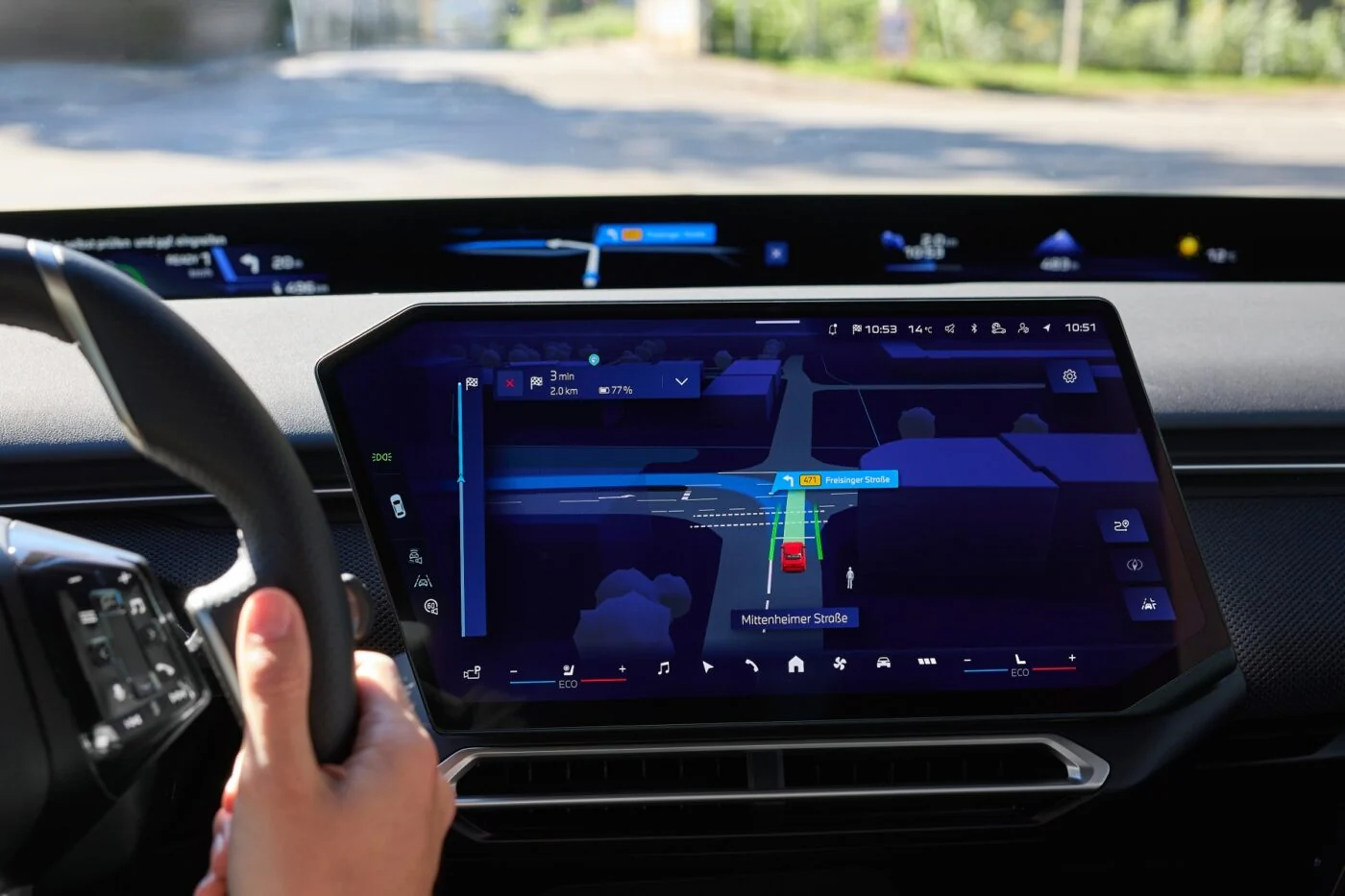
BMW urban Level 2 driver assistance. Credit: BMW, via electrive
BMW announced on November 2 that it will bring SAE Level 2 assist to city streets from 2027, starting in Germany. The functions are tied to BMW Maps guidance and add automated turns, roundabouts, multi-lane positioning, and handling of priority situations at intersections. The hardware is built into new models, including the iX3, iX4, X5, 3 Series, and 7 Series, and the functions can be unlocked later by over-the-air update.
The regulatory piece is UN Regulation No. 171, the DCAS rule, in its Series 02 form. From 2027 it would let assist systems suggest and start urban maneuvers. BMW says an independent technical service has finished the required road tests. Official approval is expected in early 2027, so the launch depends on a decision that has not happened.
Level 2 keeps the driver responsible. The functions run only while an in-cabin camera sees an attentive person at the wheel. BMW's Symbiotic Drive keeps assist active when the driver steers, accelerates, or brakes, and adapts to the driver's style instead of switching off.
The article gives no sensor types, counts, or compute specifications, and pricing for the city expansion is not set. Existing BMW Level 2 packages run about 1,000 to 5,000 euros, or about 1,500 euros for a four-year subscription. The story matters for the rule, which any maker could use, more than for BMW's version of it.
CATL moves 20 Ah solid-state cells into trial production while Sunwoda claims 400 Wh/kg
Articles: Electrek, October 28, 2026 · CarNewsChina, November 2, 2026 ·
Primary: Sunwoda disclosure of October 30 on the Shenzhen investor platform (link) · CATL investor response of October 27 (link), both as cited by CarNewsChina and Electrek ·
Image: image (Sunwoda (SEVB) solid-state pouch cells. Credit: China Tech, via CarNewsChina. Lead image is Sunwoda pouch cells, credit China Tech via CarNewsChina.)
The UK proposes mandatory cybersecurity rules for public EV chargers
Articles: electrive, November 2, 2026 ·
Primary: UK DfT consultation: gov.uk ·
Image: image (A Connected Kerb charge point in the UK (2023 file photo). Credit: Connected Kerb, via electrive. File photo from 2023, not tied to the consultation.)
SPIRIT-E puts numbers on bidirectional charging for heavy trucks
Articles: electrive, October 31, 2026 ·
Primary: TUM and MAN Truck & Bus press releases, as cited by electrive (no direct links located) ·
Image: image (A MAN eTGX during the SPIRIT-E bidirectional charging demonstration. Credit: MAN, via electrive. Photos date from the April 2026 demo.)
A German court points to EU product-safety law in a battery-recall refund case
Articles: electrive, October 30, 2026 ·
Primary: German press release: presseportal.de ·
Image: image (Production of the Cupra Born at VW in Zwickau (2021). Credit: Volkswagen, via electrive. 2021 factory photo, not the recalled car.)
UN Regulation 171 opens the way for urban Level 2 assist, and BMW says it will use it in 2027
Articles: electrive, November 2, 2026 ·
Primary: BMW Group newsroom: newsroom.bmwgroup.com ·
Image: image (BMW urban Level 2 driver assistance. Credit: BMW, via electrive. Manufacturer photo.)
Get the Electric Vehicle Technology Briefing by email