EV Technology Briefing — compiled and curated by Chris Lee
Porsche's new cathode came out of its own old batteries
Week of September 15 – September 22, 2026
Most battery recycling feeds a shared pool: black mass goes in, refined nickel and cobalt and lithium come out, and it's anyone's guess which pack they end up in next. Porsche and the German recycler Cylib just closed a tighter loop than that, building a cell whose cathode material came entirely from Porsche's own retired batteries. Elsewhere this week: a new federal rule locks down black mass exports at the exact moment the country doesn't yet have the refining capacity to use what it's keeping, a Department of Energy program bets that software can fix the 18-month wait to plug a fast charger into the grid, BMZ Poland and EVE Energy show a truck battery that holds onto most of its range in the cold, and California signs a six-bill package that quietly includes the country's first permanent label mandate for EV batteries.
Materials Science & Recycling
A cathode active material that has already been a battery once
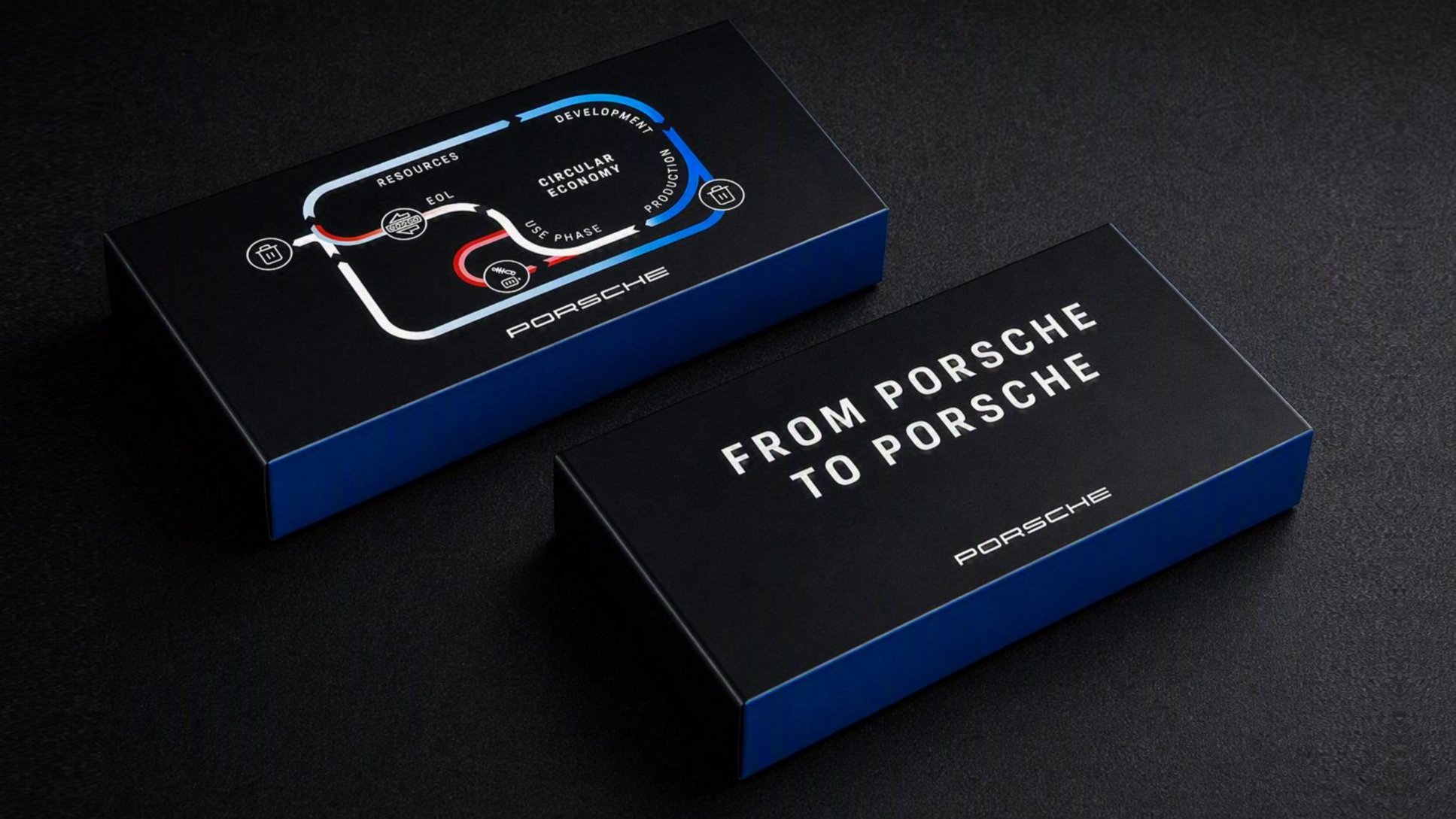
Battery cells whose cathode active material was produced entirely from recycled Porsche high-voltage batteries. Credit: Porsche AG.
Since May, Porsche has been collecting retired high-voltage batteries at its German Porsche Centers and running them through a recycling loop built with Cylib, the Aachen-based battery recycler. The batteries are discharged and dismantled, then mechanically shredded at a site in Wernberg-Köblitz into black mass. From there they go to Cylib's hydrometallurgical process in Dormagen, which uses a water-based method to pull out lithium, nickel, cobalt and manganese as usable raw materials rather than a mixed sludge that needs further separation downstream. Porsche says the cathode active material made from that recovered lithium, nickel, cobalt and manganese is now going into cells built and tested in trial vehicles, with none of the four metals sourced from newly mined material.
What makes this different from most EV battery recycling is the loop itself. Recyclers like Redwood Materials or Li-Cycle recover metals into a general supply chain, where refined nickel from a shredded Chevy pack might end up in a cathode for an entirely different automaker. Porsche and Cylib are tracking material from a specific batch of Porsche batteries back into Porsche cathode, in effect running one company's fleet as a closed materials system rather than feeding a shared commodity market.
The cells are, by Porsche's own account, still a pilot. They're "undergoing extensive operational testing," and the company says more results are expected in the second half of 2026. What hasn't been published is any comparison against cells made with virgin material: no energy density figures, no cycle life data, nothing on internal resistance or fast-charge tolerance. "Technically suitable" is not the same claim as "performs the same," and Porsche hasn't yet made the second one.
The timeline is also longer than the headline suggests. Porsche says recovered material won't be available at production scale until 2028, when it expects to integrate it into European EV production. Two years is a normal span between a pilot and a supply chain, but it's worth remembering this loop only closes for batteries that already came from a Porsche. The industry's bigger problem, the one the next story is about, is what happens to the much larger volume of black mass that didn't come from any one company's take-back program.
The black mass export ban arrives before the refineries do
A generic stock photo used to illustrate critical-mineral recovery from electronics, not a photo of a specific black mass or battery recycling facility. Credit: Superbeststock/Shutterstock, via Resource Recycling.
On July 30, President Trump signed a Defense Production Act determination naming "recoverable critical minerals and materials" essential to national defense and economic security, a category that specifically includes battery black mass and end-of-life rare-earth magnets. That determination is what let the Commerce Department's Bureau of Industry and Security issue the rule that followed: a temporary final order, effective August 27 and running one year through August 27, 2027, requiring any US seller of black mass or tungsten waste to allocate 100 percent of its monthly sales to US buyers unless BIS grants an exception. The material has to stay in the country. It just doesn't yet have anywhere to go once it's here.
The number that makes this hard rather than simple: the US generates roughly 60,000 metric tons of black mass a year, and domestic refiners can process only about 25,000 tons of it. Locking the other 35,000-plus tons onshore doesn't create capacity to process it. It creates a stockpile, or a shredder that keeps running for a customer who can't yet take delivery. Money is already moving toward the capacity side of that gap: a $10 billion Export-Import Bank loan plus $2 billion in private investment announced in February as Project Vault, a Lynas rare-earth refinery in Texas that's running into cost overruns and wastewater permitting problems, and roughly $439 million the Defense Department has put into rare-earth supply chains since 2020. None of that comes online next quarter.
The companies the rule is presumably meant to protect feedstock for are the ones already building that capacity: R3 Lithium's restarted lithium carbonate line in Covington, Georgia, covered in this briefing last week, and Cyclic Materials' rare-earth recycling facility in Arizona. A GAO assessment cited alongside the rule found that battery-recycling technology could meaningfully cut import dependence within two to three years, but flagged that recovering some materials, like the metals in semiconductors, remains technically difficult regardless of what the trade rules say.
Whether the policy accelerates that buildout or just strands US shredders with black mass they can't sell abroad and can't place at home is, as one industry analyst put it, the actual open question. A rule that fixes where the material can go and a market that hasn't yet built enough places for it to go are not automatically the same policy, even when they're signed by the same administration two months apart.
A fast charger can wait 18 months just for a grid connection
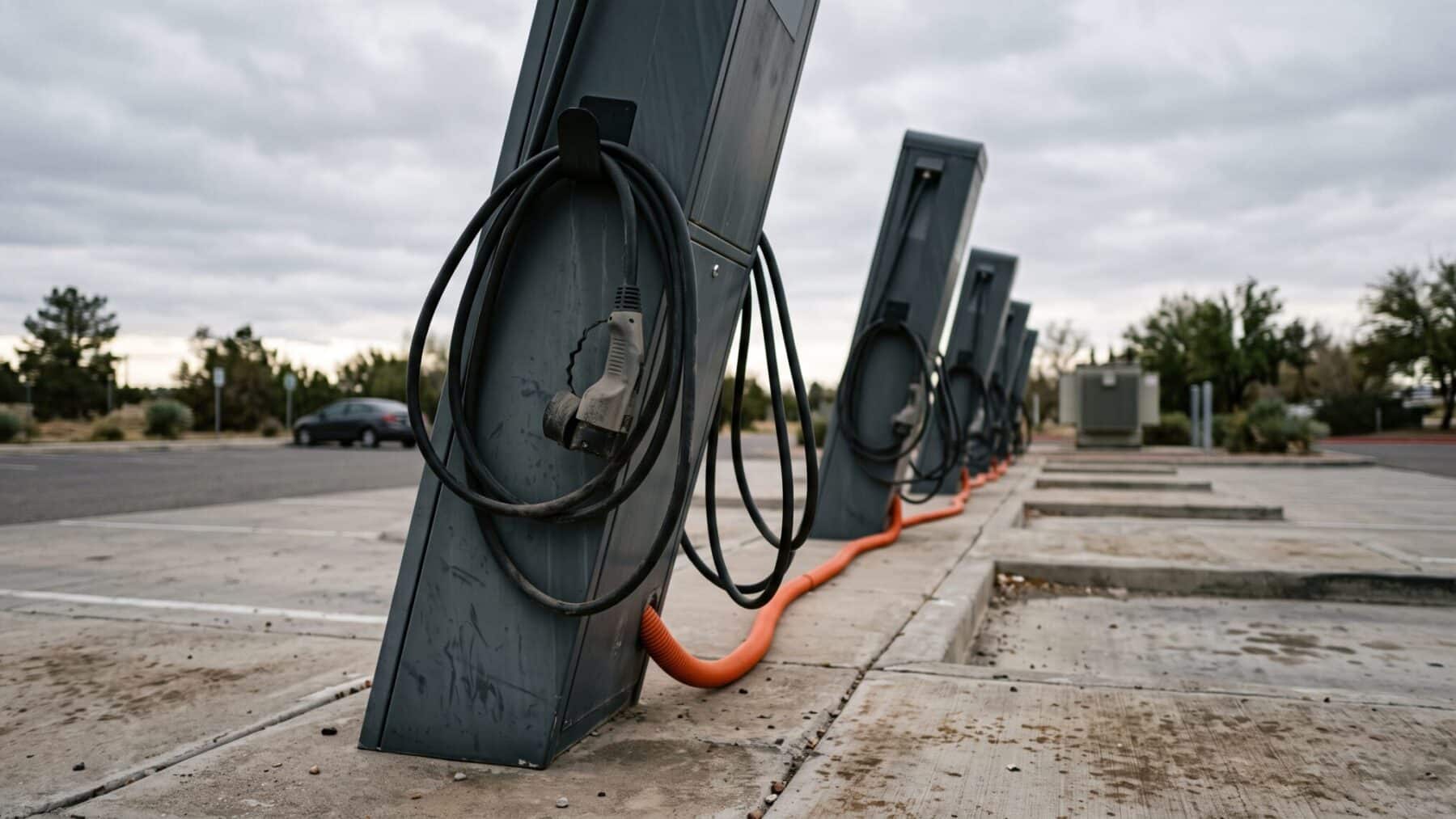
Idle DC fast chargers awaiting a grid connection. Credit: GCN.
A developer can sign a lease for a fast-charging site in January and still not have power to it the following year, and the reason has nothing to do with the charger itself. The bottleneck is the utility interconnection study, the process that checks transformer headroom, conductor sizing, protection settings and civil work before a site can be energized. For requests in the 100-kilowatt-to-5-megawatt range, which covers most highway DC fast charging, fleet depots and large commercial sites, turnaround is running 18 months or longer at some utilities. The equipment sits there the whole time, still accruing financing costs, insurance and lease payments.
Part of the reason is regulatory. FERC Order 2023 modernized interconnection procedures for large generators, the multi-megawatt solar and battery-storage projects that get their own headlines about multi-year queues. It left the distribution-level process, the one that governs a single charging site tying into a local feeder, running on older rules built for the occasional large industrial customer. That process was never sized for a queue of hundreds of DC fast-charging applications a year, and most utilities still review each one largely by hand.
The Department of Energy's response is a program, not a mandate. Through the Interconnection Innovation e-Xchange, run jointly with ENERGYWERX, DOE put up $11.2 million for what it calls Innovative Queue Management Solutions: $9.2 million for generator-interconnection tools and $2 million specifically for EV charging load requests. Ten utilities got $100,000 each in an earlier phase to validate a software approach; the current phase offers up to $2 million per utility to actually pilot one. In total the program touches 25 distribution utilities across 24 states, with the goal of replacing manual headroom and protection-study review with workflow automation, not with looser engineering standards.
The bet underneath the program is that the constraint is process rather than physics, that the same transformer and conductor checks can run faster without running looser. If that holds, it's a template any utility can copy without waiting for its own multi-year pilot. If it doesn't, the industry is back to explaining to a charging network operator why a six-figure asset has been sitting dark for a year and a half.
A heavy-truck battery that holds 85 percent of its range at −20°C
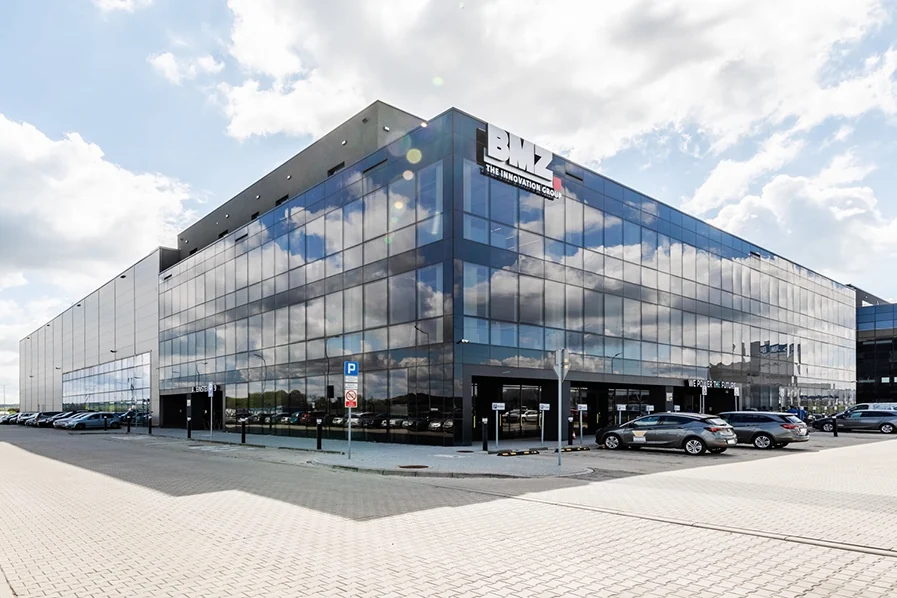
BMZ Poland is headquartered in Gliwice. Credit: BMZ, via electrive.
BMZ Poland and EVE Energy used IAA Transportation in Hanover to show a jointly developed LMFP battery aimed at heavy trucks, buses, construction and agricultural machinery, and ships. LMFP, short for lithium manganese iron phosphate, is a variant of the LFP chemistry already common in commercial EVs: same cobalt-free, nickel-free phosphate backbone, with manganese added to raise the cell's operating voltage and, with it, its energy density, without giving up LFP's cost and safety advantages over nickel-heavy chemistries.
The companies' numbers put real distance between LMFP and plain LFP. The pack is up to 10 percent lighter than a comparable LFP system for the same stored energy in a long-haul truck. It supports charging up to 1 megawatt, a 2.2C rate, enough for a 10-to-80-percent charge in under 25 minutes against roughly 35 minutes for a comparable LFP pack. Cycle life is rated above 4,500 full cycles to 80 percent state of health, with a next-generation version targeting more than 5,500.
The cold-weather figure is the one that matters most for a truck that has to run a winter route rather than sit in a lab. At minus 20 degrees Celsius, BMZ and EVE say the pack retains 85 percent of its capacity, against roughly 75 percent for a comparable LFP pack. Neither company has published what in the cell's design accounts for that gap, so take it as a measured outcome rather than an explained one for now.
Customer samples are planned for 2027, with series production starting mid-2028, which puts this well behind this week's other battery stories in terms of anything a fleet can order today. Trucking is a sensible first market for the same reason it was for LFP: a duty cycle that rewards cycle life and predictable cold-weather range over squeezing out the last few percent of energy density, which is exactly the trade LMFP is built to make.
California will require a permanent label on every EV traction battery by 2028
Image released alongside coverage of the legislation package. Credit: California Energy Commission (energy.ca.gov), via EVinfo.net.
On September 20, Governor Gavin Newsom signed six EV-related bills in one batch, most of it aimed at permitting speed rather than new technology. SB 969 modernizes inspection so a manufacturer-tested charger can go live faster. SB 1283 clarifies that the same streamlined permitting rules cover the work around a charger, not just the charger itself: trenching, electrical upgrades, solar canopies, battery storage. AB 1820 cuts permitting barriers and fees specifically for chargers at apartments and mixed-use housing. SB 1267 addresses charging access for people living under an HOA. SB 1213 tightens consumer-facing transparency around state incentives for zero-emission trucks.
The sixth, SB 615, is the one with an actual new mandate in it. Starting July 1, 2028, any battery supplier selling a new EV traction battery in California has to put a permanent label on it carrying specified information, and a remanufacturer has to rebrand and relabel a pack it remanufactures. Suppliers and remanufacturers register with the California Air Resources Board within 90 days and update that registration annually. Starting July 2029, they pay a tiered annual fee, based on their share of in-state vehicle registrations from ten years earlier, into a new Vehicle Traction Battery Recovery Fund that covers CARB's oversight. The chain of custody the fund is meant to enforce runs through manufacturers, dealers, dismantlers, repair shops and secondary users, all of whom become responsible for making sure a battery gets recovered, reused, repurposed, remanufactured or recycled at the end of its life instead of stockpiled or landfilled.
That's the same closed loop Porsche and Cylib are chasing voluntarily in this issue's lead story, except California is about to require automakers to be able to prove it happens, with a label and a paper trail, rather than publicize it when it does.
None of this is happening in a vacuum: California already has 216,445 public and shared charging plugs, more than 20,000 of them DC fast chargers, and allocated $98.5 million for light-duty zero-emission-vehicle infrastructure in the current fiscal year. Five of these six bills are maintenance on a system that size. SB 615 is the one that's actually new.