EV Technology Briefing — compiled and curated by Chris Lee
Beijing writes down 11.5 kWh per 100 km
Week of September 8 – September 15, 2026
Most industrial policy talks about market share. China's new five-year plan for the car industry does that too, but it also puts a fleet-average consumption number on battery-electric cars, which is the kind of target an engineer can actually be held to. Elsewhere this week: a Nature Communications paper that blames LMR gas generation on the discharge cutoff rather than the charge cutoff, a Volkswagen prototype that turned an ID. Polo drivetrain into a 0.158 drag coefficient, a Mahle truck motor with no magnets in it, an honest count of how many megawatt-class truck chargers Europe actually has, and a Georgia plant that makes lithium carbonate out of shredded batteries.
Policy & Regulation
Nine ministries, one consumption target, and a cap on new carmakers
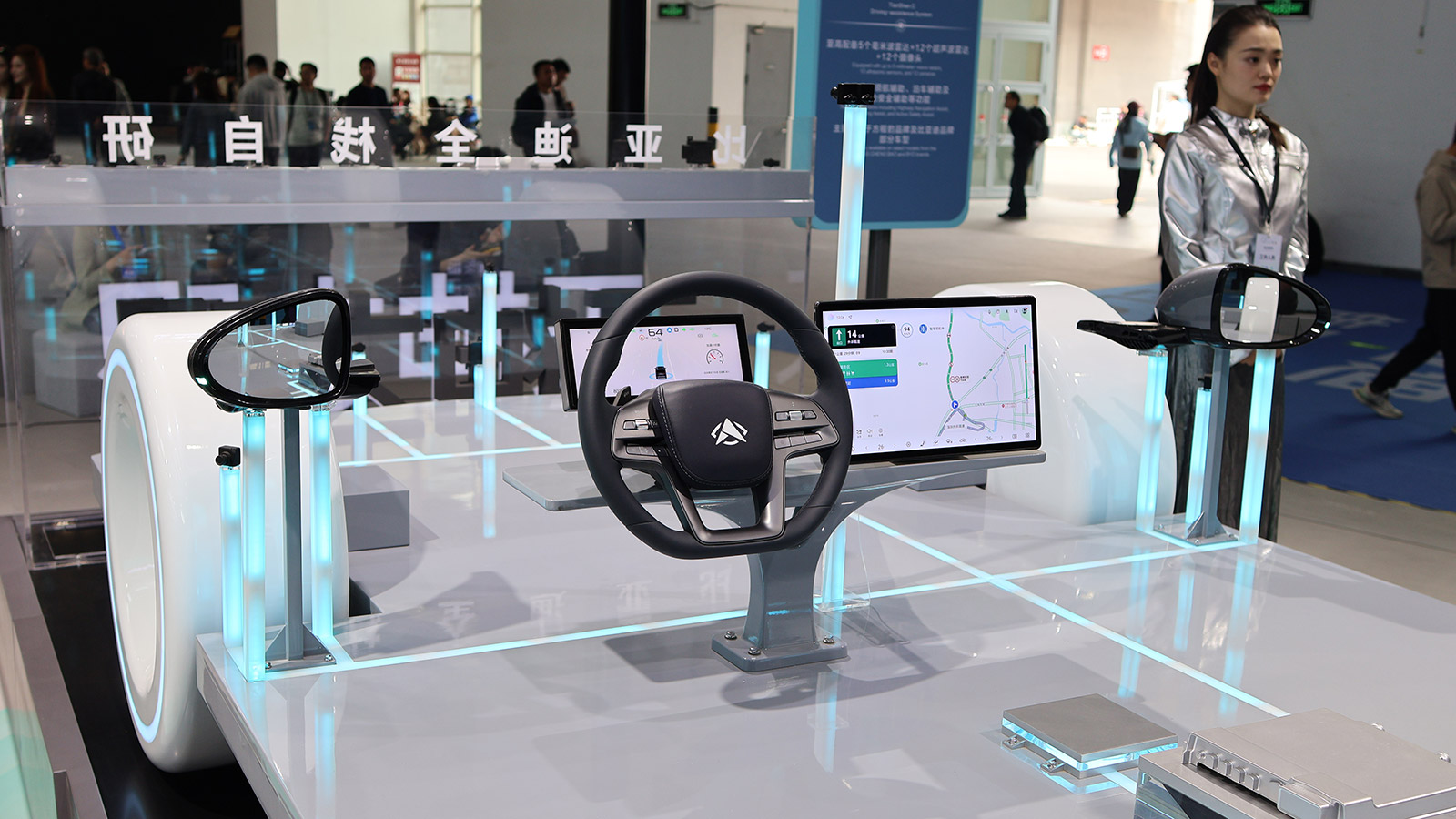
A BYD autonomous driving prototype at the Beijing Auto Show in April 2026; the plan makes highly automated driving on highways and some city roads a 2030 target. Credit: CnEVPost.
China's Ministry of Industry and Information Technology published the 15th Five-Year Plan for the Intelligent Connected New Energy Vehicle Industry on Friday, 11 September. The document is dated 9 September and carries the signatures of nine departments, including the NDRC, the Ministry of Transport, the Ministry of Public Security and the Cyberspace Administration. The headline targets for 2030 are the ones you would expect: new energy vehicles at 70 percent of new passenger-car sales and 40 percent of commercial-vehicle sales, several Chinese automakers in the global top ten, highly automated driving in regular use on highways, urban expressways and selected city roads.
The number worth pulling out is smaller. By 2030 the fleet-average electricity consumption of battery-electric passenger cars is to be about 11.5 kWh per 100 km, and average fuel consumption for passenger cars about 3.3 liters per 100 km. For scale, Volkswagen rates its new entry-level ID. Polo at 13.6 to 14.9 kWh per 100 km on WLTP, and that is a small front-drive hatchback. A fleet average of 11.5 kWh, across every SUV and sedan sold, is a demand for lighter cars, better aero, better tires and better power electronics all at once. It is a very different lever from a sales quota, because it can only be met by engineering.
The plan is also unusually blunt about overcapacity. It calls for stronger monitoring and control of vehicle and battery production capacity, strict conditions before any new standalone NEV manufacturer is approved, and mergers, restructuring and cross-regional consolidation to phase out inefficient capacity. It goes after the local subsidies, tax breaks and cheap land that provinces have used to attract factories, and it calls for antitrust and pricing enforcement, which reads as the formal end of the price war as a tolerated strategy. Read alongside the draft revision of the Road Traffic Safety Law proposed in August, which would make manufacturers rather than drivers answerable for traffic violations while an autonomous system is engaged, the direction is clear: fewer, larger companies, held to measurable numbers.
On technology the document names the gaps rather than the wins: automotive chips, operating systems, industrial software and critical basic materials. It asks for further work on battery safety, charging rate and low-temperature performance, for planned deployment of high-power charging and vehicle-grid interaction at scale, for cross-regional zero-carbon freight corridors for electric heavy trucks, and for autonomous heavy-truck demonstrations. It also says vehicles with automated driving should substantially outperform human drivers on safety, and that mechanisms to assess maturity and safety are to be built. That last clause is the same problem USDOT set itself two weeks ago with its competency-standards work. Two governments are now trying to define, in testable terms, what "good enough to drive" means. Whichever one publishes a procedure first will set the terms for everyone else.
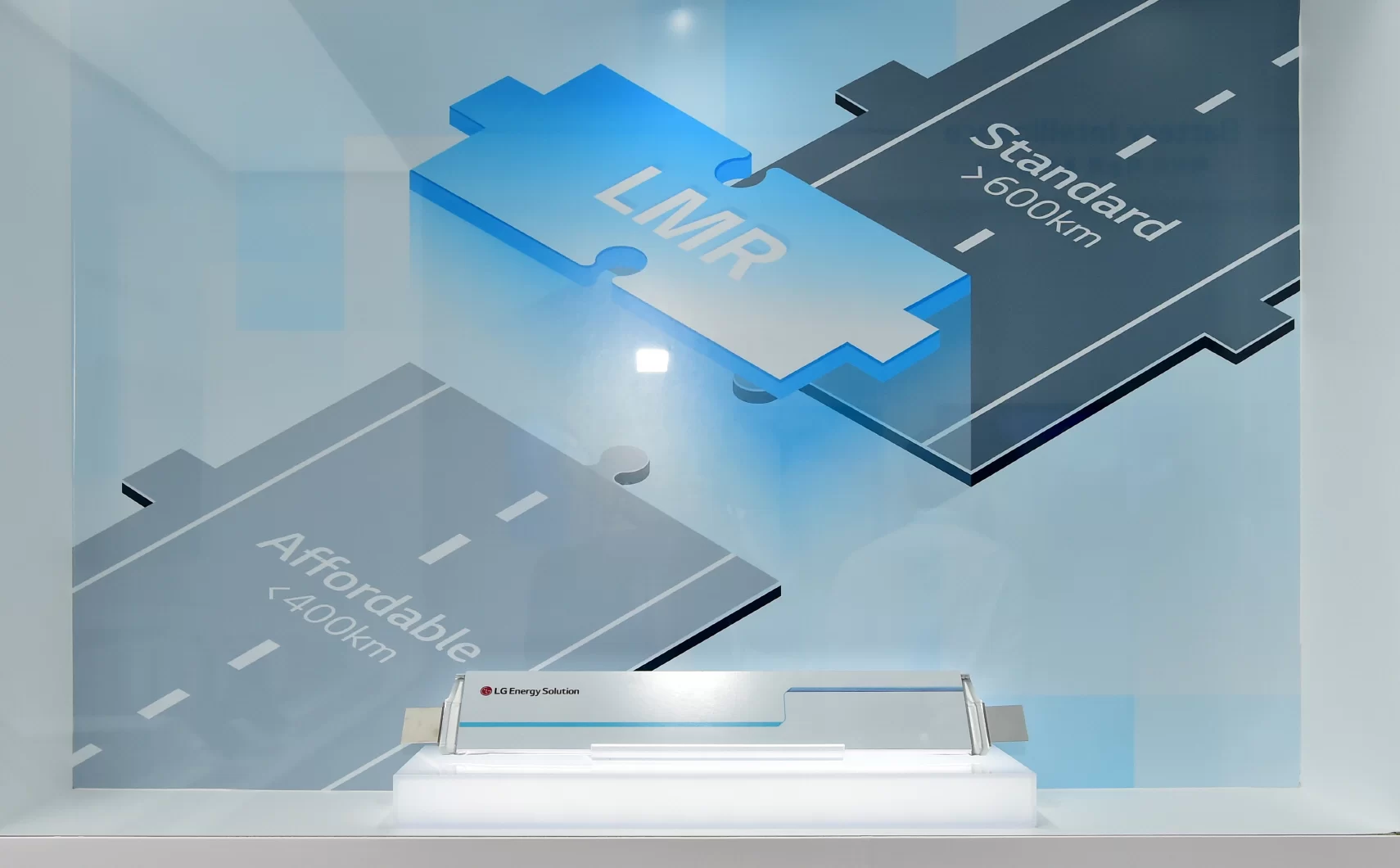
An LG Energy Solution LMR cell on display at InterBattery 2026. Credit: LG Energy Solution, via electrive.
Lithium manganese-rich cathodes are the cobalt-free chemistry that GM and LG Energy Solution plan to put into prismatic cells in the US from 2028. LMR gets its energy density from an unusual trick: it stores charge not only on the transition metals but also on the oxygen in the lattice. The catch is that oxygen oxidized during charging does not always come all the way back on discharge. What stays oxidized damages the structure and leaves as gas. In a coin cell that is a curiosity. In a 40 Ah automotive cell with almost no free volume, it is internal pressure, and pressure is how large-format LMR programs have died.
LG Energy Solution and Jongwoo Lim's group at Seoul National University have published, in Nature Communications, a look at where that oxygen actually goes. The upper charge voltage matters, as everyone assumed: dropping it from 4.6 V to 4.3 V raised the share of oxidized oxygen that was reduced again from 86 percent to 97 percent. The part that is new is the discharge cutoff. Taking discharge down from the conventional 3.0 V to 2.0 V let the oxygen recover to nearly its original state. Cell stability, in Lim's phrasing, can be improved through electrochemical protocol design alone, and the protocol has to consider both ends of the cycle.
LG then applied this to 40 Ah-class cells, redesigning the operating window and adding a lower-temperature formation step to hold gas generation down. The optimized cells retained 92.2 percent of their initial energy after 883 cycles. That is a respectable number for a chemistry that has historically not survived large-format at all. It is not yet an automotive number, and the announcement leaves out energy density, charge rate, and any comparison against the NMC cells LG ships today. It also does not mention a timeline beyond the GM program.
The trade is worth stating plainly. A 2.0 V discharge cutoff is very low, and a 4.3 V charge cutoff gives back some of the capacity that made LMR attractive in the first place. The paper's contribution is not a bigger cell. It is a map of which voltage limits buy which amount of oxygen reversibility, which lets a BMS engineer make that trade deliberately rather than discover it in a warranty claim.
A 0.158 drag coefficient built from an ID. Polo parts bin
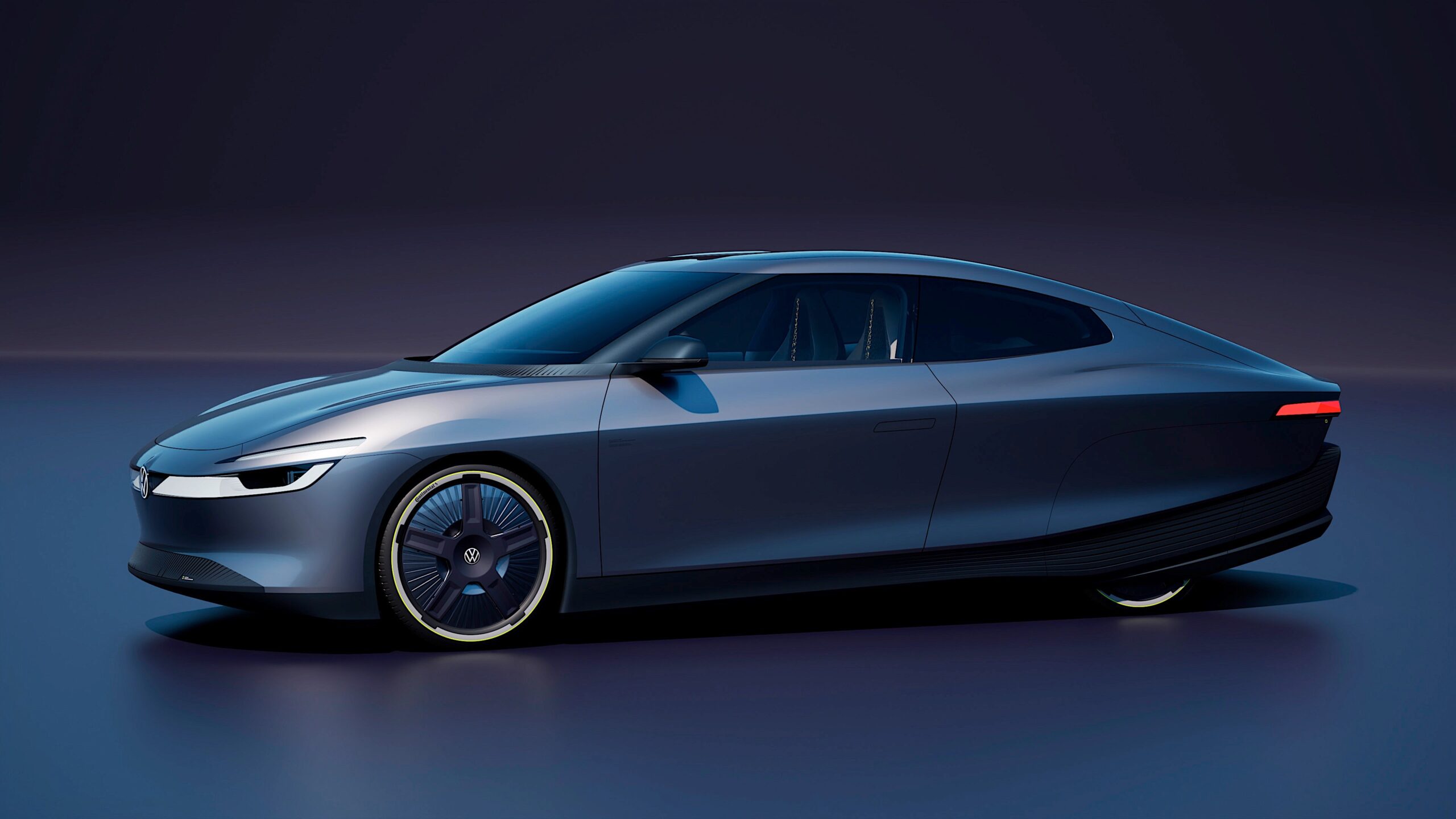
The Volkswagen Mission Efficiency prototype. Credit: Volkswagen, via Destination Charged.
Volkswagen's Mission Efficiency prototype is a concept car, is not for sale, and would normally be outside this briefing's remit. It is here because of what it is made of. The motor is the 99 kW unit from the ID. Polo. The battery hardware is the ID. Polo's. The front suspension and front brakes are the ID. Polo's. Around that, Volkswagen built a teardrop coupe with a drag coefficient of 0.158 and a frontal area of 2.08 m², and drove it 1,278 km from Wolfsburg to Vienna on one charging stop, at 6.89 kWh per 100 km without charging losses and 7.51 kWh with them. The Record Institute for Germany certified three records in the near-production four-seater EV category.
For scale, CdA is what the air actually sees, and 0.158 × 2.08 gives 0.33 m². A slippery production sedan at 0.22 and 2.3 m² is around 0.51. Volkswagen says that above 80 km/h the prototype uses more than 30 percent less energy than a standard ID. Polo, and that at 140 km/h it needs about what the Polo needs at 100. That is the practical shape of the argument: highway consumption is an aero problem, and highway is where EV range collapses and charging stops multiply.
The details are the interesting part because they are the transferable part. Wheels account for 25 to 30 percent of a car's drag, so the wheel arches were drawn tight to the tire radius and every wheel got a patented rim deflector on its inboard face to stop air entering and churning inside the rim. Continental built a concept tire off the EcoContact 7 with rolling resistance of 4.9 kg per tonne, about 25 percent under the threshold for the EU's class A label. The rear axle uses an electromechanical brake developed with AUMOVIO, which deletes the hydraulic lines and their friction losses at that end of the car and allows brake-force distribution to be varied for recuperation. A 370 W solar layer in the roof and trunk lid feeds the 12 V system and is good for up to 30 km a day in the right season.
Two footnotes. The 54.9 kWh net battery figure was raised from the production 52.0 kWh by software for the record run; Volkswagen says production cars hold back that margin for longevity, and a record car with a short life does not. And the "ideal trip" record of 6.48 kWh per 100 km was set at a constant 68 km/h with the climate control off, which is a number for a certificate rather than a commute. The 7.51 kWh figure, on real roads across four countries, is the one to remember.
Mahle's truck motor excites the rotor through the air instead of a magnet
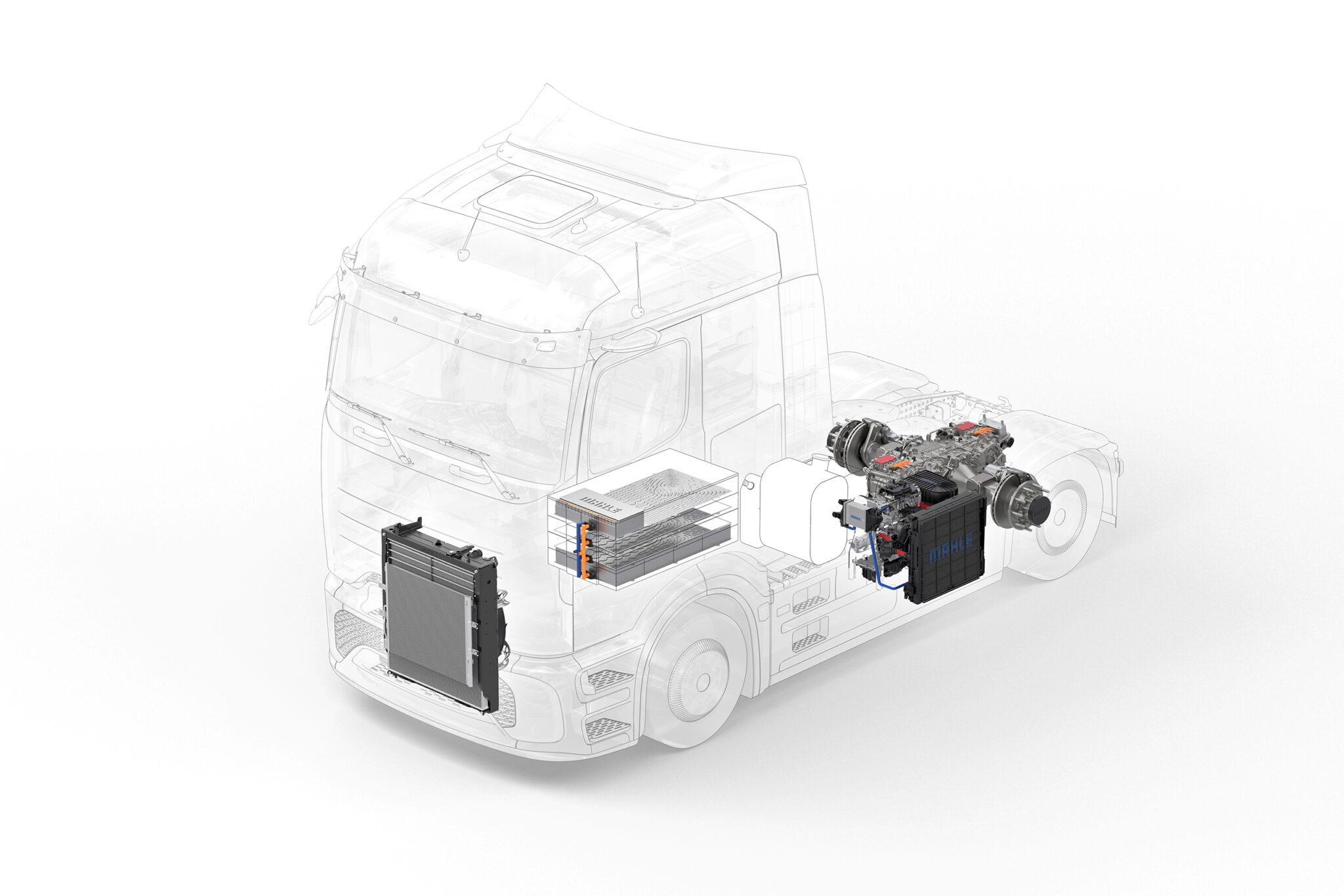
Mahle's electric drive system for heavy trucks, shown installed in a chassis. Credit: Mahle, via Automotive World.
Mahle used press day at IAA Transportation in Hanover on 14 September to premiere a heavy-truck traction motor with no permanent magnets in it. The MCT, for Mahle Contactless Transmitter, is a separately excited synchronous machine. Instead of neodymium in the rotor, it has a rotor winding, and instead of slip rings and brushes to feed that winding, it uses an inductive coupler to transfer the excitation power across an air gap. Mahle first showed the contactless-transmitter idea for passenger cars several years ago. This is the heavy-duty version, sized for a truck's drive axle.
The figures: 370 kW peak, more than 900 Nm, 95 percent efficiency on the VECTO cycle that Europe uses to certify truck CO₂, and up to 3 kg of rare earth magnets removed per vehicle. Mahle says the whole drive is about 10 percent, or up to 10 kg, lighter than a comparable permanent-magnet synchronous motor and has higher real-world efficiency across a broader range of operating points. That second claim is the technically plausible one. A wound rotor can have its field turned down at high speed and light load, where a permanent-magnet machine is stuck fighting its own back-EMF, and a long-haul truck spends most of its life at exactly that kind of steady, partial-load cruise.
Wound-rotor motors without magnets are not new; BMW and Renault have both used them in cars. What has kept them out of trucks is the excitation path. Brushes wear, slip rings need service, and both are a liability at the duty cycles and mileages a Class 8 tractor sees. Moving the excitation across an inductive coupler removes the wear item. It adds a small power-electronics stage on the rotor side and some control complexity, and it is fair to ask how the coupler and rotor electronics handle a decade of heat and vibration. Mahle has not published that data.
The context is the same one behind Schaeffler's magnet-recovery story last week. Neodymium is the one input in an e-axle a European supplier cannot buy at will. A motor that needs none of it, at a small weight penalty and no efficiency penalty on the certification cycle, is a supply-chain decision as much as an engineering one. Mahle says specific development projects with truck makers are under way, without naming them.
Europe has 730 truck-only fast chargers and needs 35,000
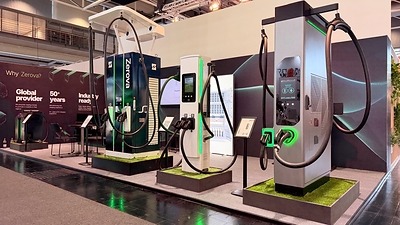
Zerova's MCS dispenser on display at IAA Transportation 2026 in Hanover. Credit: Zerova, via PR Newswire.
IAA Transportation opens in Hanover this week, and the vehicles on the stands have quietly settled the question of whether megawatt charging is real. MAN's revised eTGX, unveiled on press day, has had a Megawatt Charging System inlet as standard since July and takes 750 kW through it, against 375 kW on CCS. Its new battery generation stores 92 kWh gross and 88 kWh net per pack, a 95 percent usable ratio, and a 6×2 tractor can now carry seven packs for 644 kWh gross and a claimed 720 km. Volvo's FH Aero Electric is on the same floor with MCS. Daimler says its trucks get it from the second half of 2027. On the supply side, Zerova launched an MCS dispenser rated to 1,440 kW and 1,500 A of liquid-cooled current, running 150 to 950 V DC, built against the IEC TS 63379 connector specification published earlier this year.
The infrastructure is a different story, and the industry's own trade body said so. Ahead of the show the VDA published its count: 730 public charging points over 350 kW reserved for heavy-duty vehicles across the entire EU, plus just under 2,000 at mixed-use sites. Its estimate of what is needed by 2030 is around 35,000 public MCS points in Europe, 4,000 of them in Germany, and up to 50,000 truck-capable points in total. That is a factor of roughly 50 between what exists and what the CO₂ fleet rules assume, and the VDA's president used the press conference to say the penalties in those rules "must be brought in line with reality."
Look at the electrical numbers and the reason for the gap is obvious. A 750 kW session is a megawatt-class grid connection per stall. Zerova's dispenser at full rating is 1.4 MW per stall. A modest six-stall truck site is a medium-voltage substation with a transformer, a queue at the DSO, and a permit process that in Germany the VDA says takes years. The trucks got here first because a truck is one company's decision. A charging corridor is a utility's, a regulator's and a landowner's, none of whom are at IAA.
This is the same shape as the BC2BC corridor story last week, with the numbers filled in. The MCS standard is done, the connectors are shipping, and the vehicles are in production. What remains is the part that has always been slowest: copper in the ground and a permission to energize it.
The Covington plant is back, this time pulling lithium out first
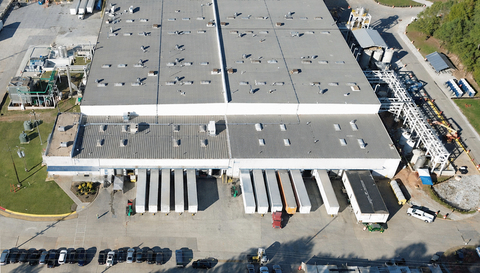
Image supplied with R3 Lithium's announcement of its Covington, Georgia facility. Credit: R3 Lithium, via Business Wire.
R3 Lithium announced on 10 September that it has started operations at a 154,000-square-foot plant in Covington, Georgia, producing lithium carbonate from 100 percent recycled battery material. If the address sounds familiar, it should. This is the former Ascend Elements site, which a previous owner built with roughly $150 million and which first demonstrated production-scale 99 percent lithium carbonate from recycled feedstock in 2025 before the company behind it faltered. R3 bought the plant in July with no liabilities attached, kept the team that ran it, and raised $15 million in Series A money from Integral GlobalTech Partners, TDK Ventures and Axial Partners to bring the line up to continuous operation. Its CTO, Eric Gratz, co-founded Ascend Elements.
The process is what distinguishes it from most North American recyclers. The usual hydrometallurgical route leaches black mass and recovers nickel, cobalt and manganese first, with lithium coming out late from a dilute stream, at low yield, or not at all. R3 runs the black mass through a calciner-based crystallization step and a water-based precipitation to take the lithium out first, on the same site where the batteries are shredded. What remains is a concentrated metal oxide rich in nickel, cobalt, manganese and graphite, which is sold on as a separate product. The company says the CMO often fetches at or above what it paid for the feedstock, which if true means the lithium carbonate is close to free at the margin.
The capacities are real but modest: 30,000 tonnes a year of shredding and a 2,500-tonne lithium carbonate line, with floor space for a second. R3 claims that will make Covington more than half of US lithium carbonate production in 2027, which says as much about how small US production is as about the plant. It holds around $1 billion in signed offtake, with Trafigura named as a customer. Its growth model is modular 5,000-tonne units built only against signed offtake.
The line to hold onto is Gratz's: every battery already in service is a lithium deposit that is above ground and concentrated. A domestic mine takes seven to ten years to permit. This plant took a bankruptcy and a summer. Whether it runs continuously is the thing to check next year, because "first to demonstrate" is exactly the milestone the previous owner also reached.