EV Technology Briefing — compiled and curated by Chris Lee
Six hours in a vacuum chamber at 120°C
Week of September 1 – September 8, 2026
The word "solid-state" has been doing a lot of unearned work for a couple of years now. This week a Taiwanese company put a cell into production and handed it to two outside labs, one to measure the energy density and one to run China's mass-loss test, which is the closest thing the industry has to a lie detector for that word. Elsewhere: a lithium metal cell that has been cycling for nine thousand cycles, an LFP benchmark that got there by squeezing rather than by switching cathodes, a German supplier prying magnets back out of rejected rotors, three countries agreeing on a truck charging corridor, and a five-year federal plan for automated vehicles.
Solid-State & Standards
ProLogium's cell loses 0.05 percent of its mass, and that is the headline
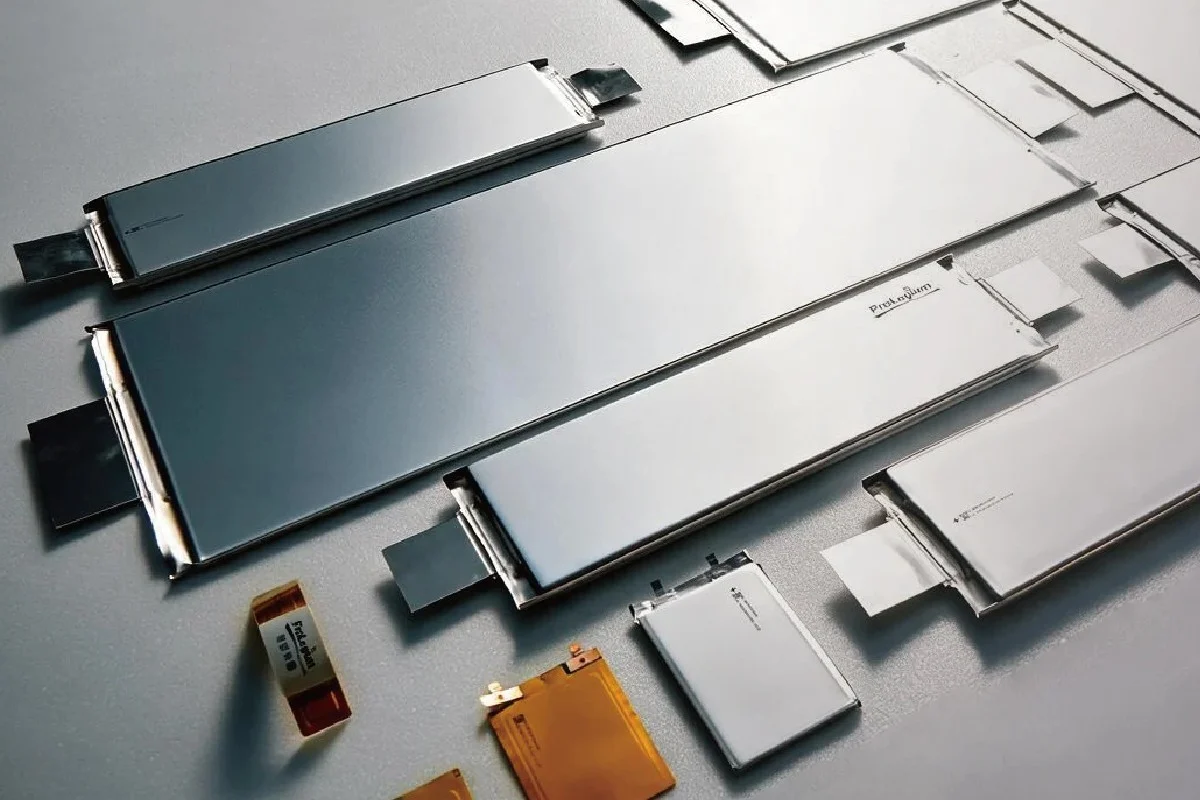
ProLogium's range of lithium ceramic cells. Credit: ProLogium, via electrive.
ProLogium said on 2 September that its Generation 3.5 Lithium Ceramic Battery is in mass production. The cell is a 185.4 Ah large-format pouch. TÜV Rheinland measured it at 381 Wh/kg and 903 Wh/L, which puts it well above the roughly 285 Wh/kg reported for high-nickel ternary cells like CATL's Qilin, never mind LFP.
The energy density is the number that gets quoted. The more interesting number is 0.05 percent. UL Solutions tested the cell under GB/T 43568-2026, the Chinese national standard that took effect in July, which decides whether a cell may be called all-solid-state by drying it in a vacuum chamber at 120°C for six hours and weighing what is left. Anything above 0.5 percent mass loss means there was volatile organic electrolyte in there. ProLogium reports less than a tenth of the threshold.
That test exists because the label had come loose from the thing. Nio's WeLion pack and the QingTao-supplied pack in the IM L6 are semi-solid designs that keep liquid electrolyte, and SAIC-backed IM Motors marketed its as a "Light-Year Solid-State" battery anyway. A vacuum chamber and a scale settle the argument without anyone having to agree on definitions first. China submitted the same methodology to the IEC on 21 August, where a working group including France, Japan and South Korea will spend the next two to three years turning it into an international standard. From 1 September, Beijing also began taxing lithium-ion battery products at 2 percent, rising to 4 percent in 2027, while exempting solid-state, sodium-ion and fuel cells through the end of 2028. The test is now a tax boundary as well as a technical one.
What ProLogium has not shown is volume. Reports on the Taoyuan plant's capacity do not agree: electrive puts it at 3 GWh, while CarNewsChina describes initial operational capacity of 0.5 GWh with plans to reach 1 to 2 GWh. Even the higher figure is small. The Dunkirk plant in France, under construction since February, is scheduled to finish a first phase in 2028 and reach 12 GWh by 2032. ProLogium also reports 2.4 million cumulative cells shipped, but more than 900,000 of those went into a car audio application, not traction packs. A verified cell and a qualified factory are different achievements, and only one of them happened this week.
A lithium metal cell that has been cycling since the power failures
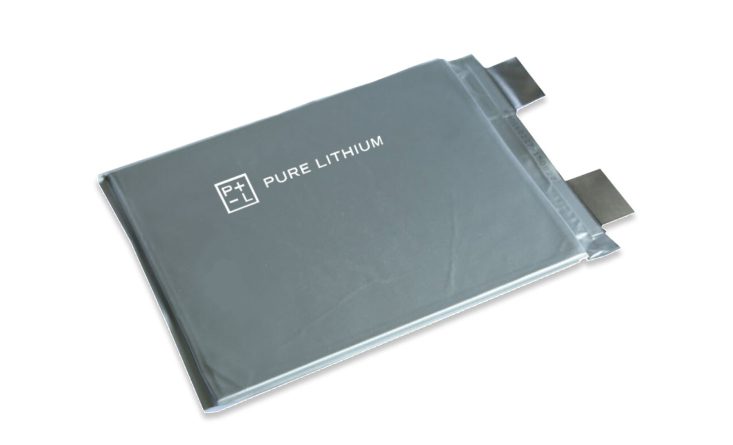
Pure Lithium's Advanced Anode pouch cell. Credit: Pure Lithium, via Charged EVs.
Replacing a graphite anode with lithium metal roughly doubles a cell's energy density and cuts weight and cost, and the industry has known this for decades. The reason nobody ships it is cycle life. Plated lithium does not come back down evenly, the surface grows dendrites and dead lithium, and the cell dies long before a car would be paid off.
Pure Lithium says its Advanced Anode cell has passed 9,315 cycles at 1C and 100 percent depth of discharge, with negligible capacity fade, and is still running. Both of those conditions matter. 1C means a full charge or discharge every hour, and 100 percent depth of discharge means the full swing every time, which is the harshest way to count cycles. The company puts commercial lithium-ion life at 250 to 2,000 cycles depending on the application, so this is between five and thirty-seven times that.
The trajectory is worth noting alongside the number. In January 2025 the same company reported 2,200 cycles under the same conditions, from an anode it had designed to reach 1,000. Getting from 2,200 to 9,300 in twenty months is a steeper curve than a materials problem usually allows. Pure Lithium also volunteers that the wobbles early in the data came from a lack of temperature control and power failures at its original Boston lab, which is the kind of detail a company inventing a graph does not usually include.
Founder Emilie Bodoin frames the result as a levelized cost of storage argument rather than a range argument, and puts the potential LCOS reduction at 75 percent. That points at grid storage and data centers before cars. It is also a single company's internal testing on cells of unstated capacity, with no third-party report and no pack-level data, which is a different evidentiary standard than the ProLogium story above. A cell that survives 9,315 laboratory cycles has not yet survived a winter.
China's fourth-generation LFP gets past 200 Wh/kg by squeezing harder
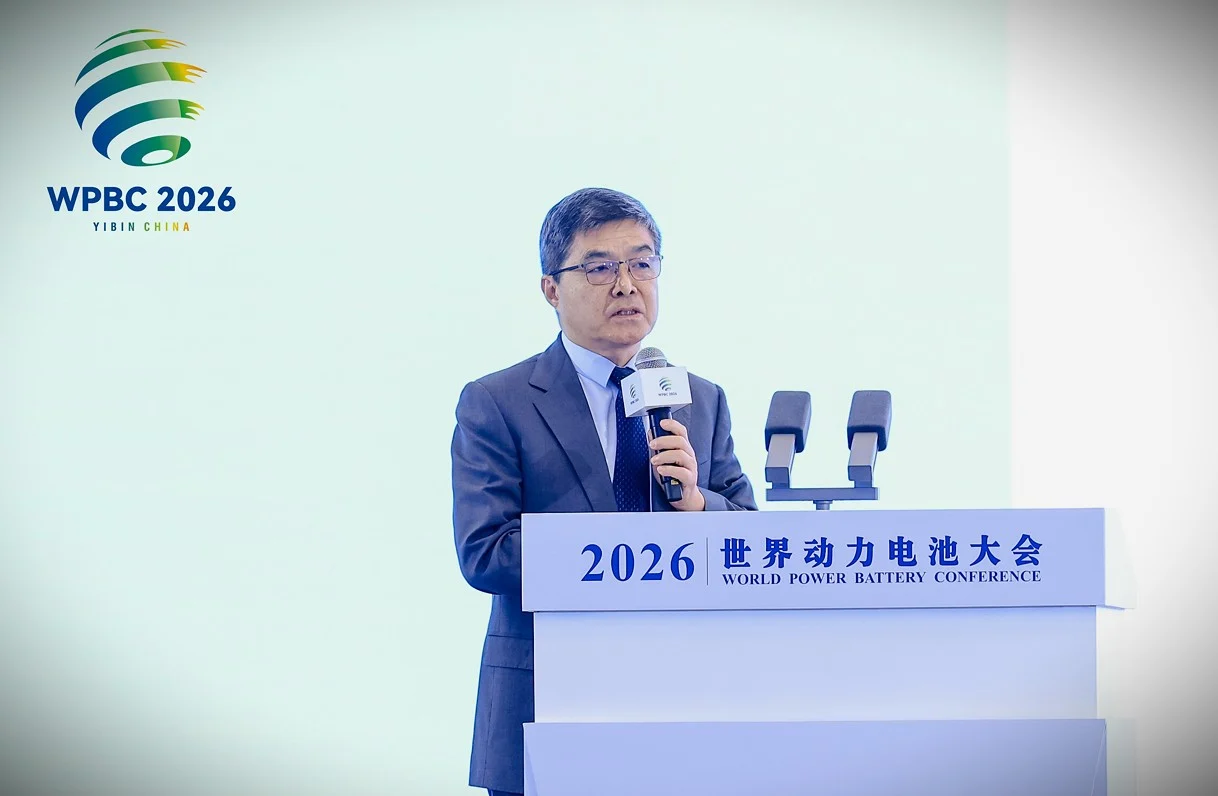
Ouyang Minggao disclosing the benchmark at the 2026 World Power Battery Conference in Yibin, Sichuan. Credit: WPBC, via CarNewsChina.
Academician Ouyang Minggao of Tsinghua University disclosed a fourth-generation high-compaction LFP benchmark above 200 Wh/kg at the World Power Battery Conference in Yibin. The route there is compaction: cathode powder pressed to roughly 2.65 to 2.80 g/cm³, yielding volumetric energy density above 430 Wh/L. No nickel, no cobalt, same chemistry.
This matters because of where LFP's gains have been coming from. Cell-to-pack architectures, CATL's CTP and BYD's Blade, bought years of improvement by deleting inactive material between cells rather than improving the cells. That well is running dry. Packaging can only be optimized once, and further range has to come out of the cell again. For scale, BYD's Blade 2.0 Short Blade is 160 Wh/kg and the Long Blade reaches 210, but the 210 is reserved for flagship long-range applications. Around 200 Wh/kg is still uncommon across the broader LFP market, and LFP was 81 percent of the 335.6 GWh China installed in the first half of this year.
Compaction is not free. Packing more material into the same volume shrinks the pore space the electrolyte needs to move through, so ionic transport gets worse as volumetric energy density gets better. Push it too far and the cell gains capacity it cannot deliver at any useful rate. That pushes the difficulty into particle size distribution, binder and conductive additive formulation, and calendering control, none of which appear in a headline number.
A separate disclosure at the same conference put automated prismatic winding at 7.5 cells per minute against a 4.4 baseline, a 70 percent gain. Winding is one station on a line, so that is not 70 percent more finished cells. Formation and aging still take as long as they take, and they were the bottleneck before. But it is a reminder that the cost curve in this industry is as much a manufacturing story as a chemistry one, and both were being talked about in the same room.
Schaeffler presses the magnets back out of rotors that failed
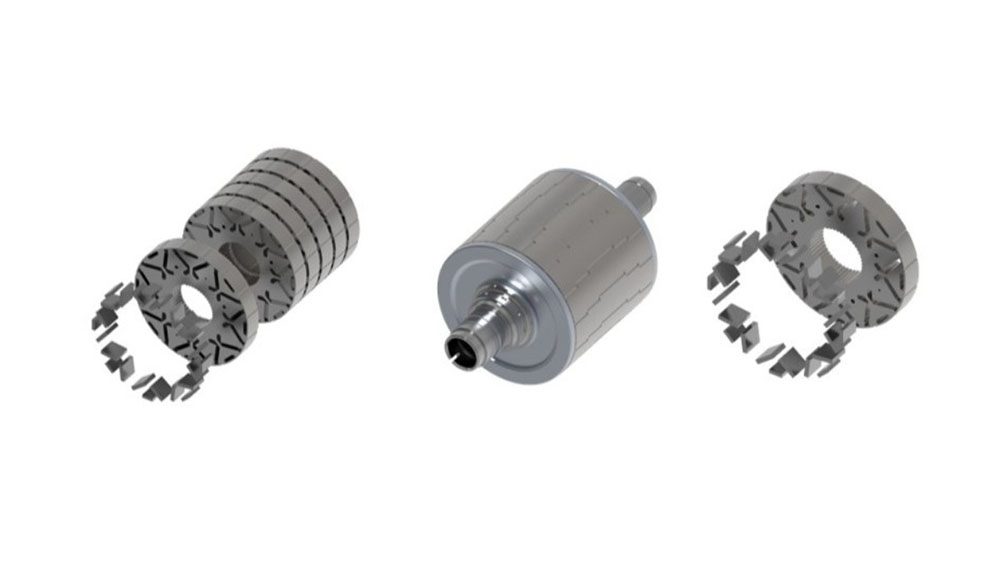
Image supplied with Schaeffler's announcement. Credit: Schaeffler, via Charged EVs.
Schaeffler's e-mobility plant in Szombathely, Hungary has worked out how to recover rare earth magnets from rotors that failed in manufacturing and put them into new ones. Nine people worked on it, seven in Hungary and two in Germany. The magnets are pressed out, cleaned, vacuum packed, and requalified before reuse.
The reason this is a project rather than an obvious step is transfer molding. Magnets are set into slots in the rotor's laminated core and locked there with injected resin, which is exactly what you want in service and exactly what you do not want when the part is rejected at final test. A rotor that fails inspection is not a bin of parts. It is a resin casting with several hundred dollars of neodymium inside it.
This is a factory scrap loop, not end-of-life recycling, and the distinction is the whole point. Magnets from a rejected rotor have a known composition, a known grade and a known handling history, none of which is true of a magnet pulled from a fifteen-year-old car. The material never leaves the plant, so there is no collection, sorting or transport step. Schaeffler says the process moves to any permanent-magnet motor plant that uses transfer molding.
The announcement carries no numbers. Schaeffler says the investment is minimal and the savings significant, and credits reduced scrap and lower transport emissions, without quantifying any of it. Take the claim as directional. What is not in doubt is the pressure behind it: rare earth supply is the one input in an e-motor that a European supplier cannot source at will, and the cheapest tonne of neodymium is the one you already bought.
Three countries agree on one truck charging corridor down the I-5
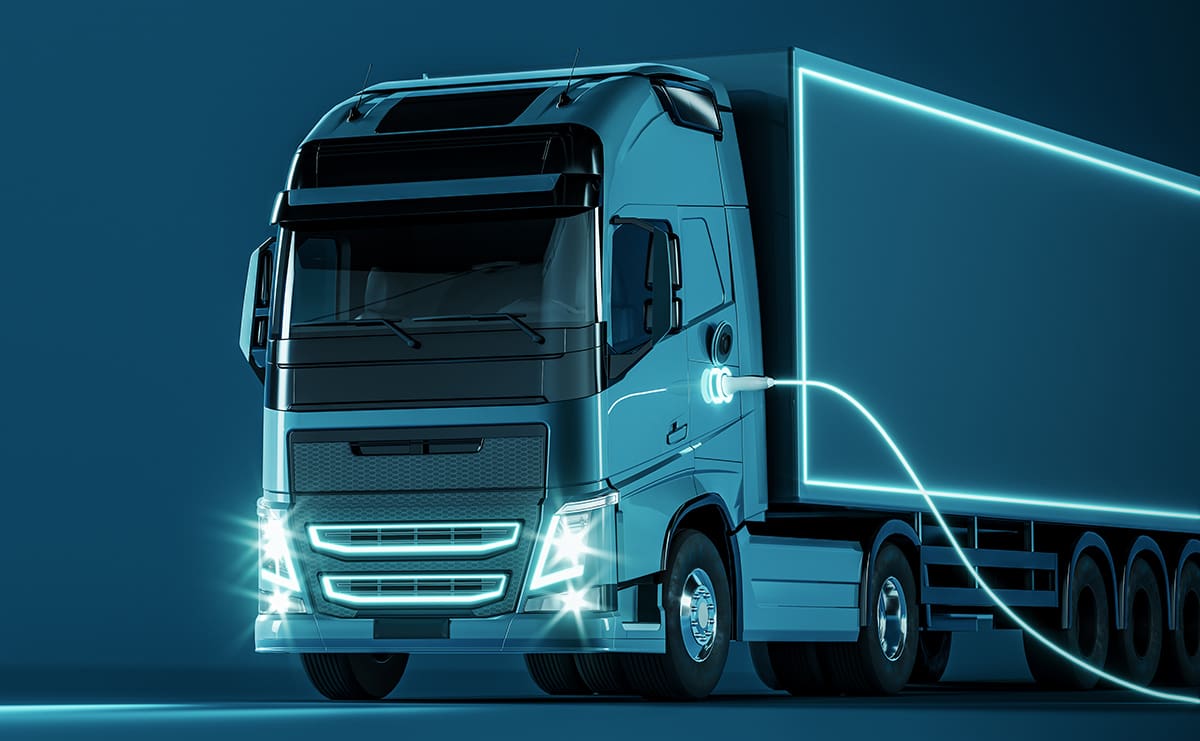
Stock photograph of an electric truck, used to illustrate the corridor; not a BC2BC site. Credit: AdobeStock, via Charged EVs.
The BC2BC corridor runs 2,222 km from Vancouver, British Columbia to Baja California, following the I-5 and carrying an estimated 10,000 trucks a day. The initial buildout is 20 charging stations and 3 hydrogen fueling stations, with megawatt charging planned along the route. Volvo Group North America, Southern California Edison, Tesla, EV Realty and King Fio Trucking took part in the launch event at the Port of Long Beach, with CALSTART coordinating.
Corridor announcements are cheap and this one deserves the usual skepticism about station counts that have not been permitted yet. What makes it worth reading is the shape of the problem it addresses. A depot charger serves trucks that come home every night, which is most of the electric fleet today and the easy case. A linehaul truck between Vancouver and Tijuana does not come home. It needs to charge at a stranger's site, in a different jurisdiction, possibly in a different country, and it needs that site to be there before anyone buys the truck.
Twenty stations across 2,222 km is roughly one every 110 km, which is thin for a Class 8 truck but not absurd given the range of current models. The harder constraint is not spacing. Each megawatt-class site is a grid interconnection, and on this route those requests land at BC Hydro, three US state utility regulators and CFE, none of whom share a queue or a timeline. Southern California Edison's presence at the launch is the substantive part of the announcement.
The three-country framing is doing real work too. A US-only corridor stops at the border, which is where a lot of freight on this route is going. Getting Canada and Mexico into the same plan means the truck does not have to be the thing that changes at the crossing.
USDOT writes down what it plans to regulate about automated vehicles, and when
Illustration used with ACT News' coverage; a stock image, not a photograph of any vehicle described. Credit: Adobe Stock, via ACT News.
USDOT published America Leads: DOT's National Strategy for Automated Vehicles, Fiscal Years 2026-2030 on 3 September. It organizes federal work around four objectives: safety, regulatory certainty, US innovation, and interoperable corridors. It creates no requirements by itself. Everything in it arrives later as rulemakings, guidance and coordination, which is the correct way to read a strategy document and the reason most people will not.
Two items are worth watching. NHTSA is preparing an advance notice of proposed rulemaking for objective automated driving competency standards, which USDOT calls the first safety standards for automated vehicle competency. That is an attempt to define, in testable terms, what it means for a driving system to be able to drive within its operating design domain. No test procedures, thresholds or dates exist yet. If that work produces something measurable it changes how every AV company demonstrates readiness. If it does not, the current arrangement holds, where each developer certifies itself and the evidence is a disengagement count and a safety case nobody outside the company reads.
The second is FMCSA. Automated trucks are already hauling freight on interstate routes under regulations written on the assumption that a person is in the cab. FMCSA is developing changes covering operation, inspection, repair and maintenance, separating the rules that still make sense from the ones that only made sense with a driver. A pre-trip inspection is a person walking around a vehicle. PHMSA is separately working through what hazmat rules mean when nobody is aboard to hand over shipping papers.
The interoperable corridors objective is the quietly ambitious part. USDOT is researching how to convert traffic laws into machine-readable data that a driving system could consume across state lines, plus real-time sharing of closures and lane realignments. It also states plainly that connected infrastructure is not a precondition for deployment, and that road operators should not have to make AV-specific investments. That is a bet on the vehicle rather than the road, and it is the right bet, because the road is fifty jurisdictions and the vehicle is one company.