EV Technology Briefing — compiled and curated by Chris Lee
Filming a battery cell as it fails, 1,000 frames a second
Week of August 11 – August 18, 2026
Six stories this week. The lead is a measurement problem finally being solved: Fraunhofer EMI built an X-ray rig that watches the inside of a large prismatic cell during thermal runaway, in real time, and Volkswagen's PowerCo is taking it into a factory. Elsewhere, Hungary's charging operators started throttling their own fast chargers to keep a heat-stressed grid standing, Nio's fifth-generation swap station stopped asking cars to be the same size, Germany's Altmark lithium project narrowed its extraction chemistry to a single approach, California cleared Waymo to more than triple its map, and the UK reopened the sales mandate it wrote two years ago.
Battery Safety
Fraunhofer's X-ray rig watches a cell fail from the inside
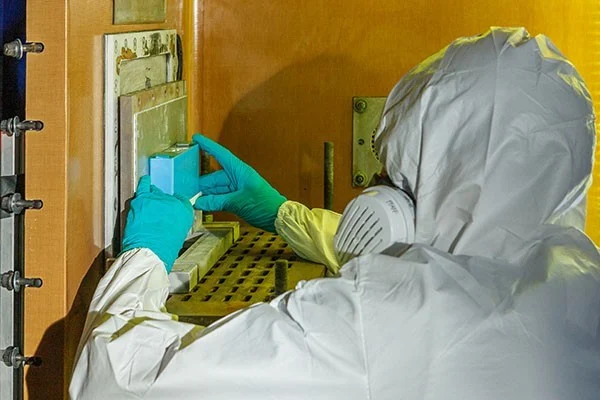
A battery cell goes into the X-ray system. Credit: Fraunhofer EMI, via electrive.
Everyone who designs a battery pack has been working half blind. When a cell fails, what actually happens inside it has been reconstructed from simulation, from destructive teardowns after the fact, or from indirect measurements at the case. The Fraunhofer Institute for High-Speed Dynamics, Ernst-Mach-Institut, has now built a system that just looks. Its high-speed X-ray rig records up to 1,000 images per second through a large-format prismatic cell while that cell is under load, and it resolves gas formation, material displacement and crack propagation as they happen.
The imaging is paired with a purpose-built test chamber and a sensor suite logging temperature, pressure, voltage and gas flow on the same timebase. The hard engineering was the chamber itself. X-ray optics do not survive a thermal runaway, so the whole method depended on shielding the detector side from an event designed to be violent. "Our in-situ method allows us to see what happens inside a cell in fractions of a second, in real time and at the highest resolution," said Dr Sebastian Schopferer, who heads battery safety at Fraunhofer EMI. "This fundamentally changes how we understand battery design and safety."
It is already in use. Fraunhofer says it has characterised material ejection during thermal runaway and cell-to-cell propagation in multi-cell setups for several German manufacturers, Volkswagen and Audi among them. The next step is industrial. Fraunhofer EMI and PowerCo, Volkswagen's cell subsidiary, plan to install one of these systems at the Salzgitter plant by 2028, where it can be pointed at production cells rather than research samples. PowerCo CTO HW Vassen framed the value as speed to insight rather than a new capability on paper.
The quiet significance is what it does to simulation. Pack-level thermal models have been calibrated against outcomes, not against the mechanism. Feed them footage of the mechanism and the calibration stops being a fit. Fraunhofer notes the system scales across cell formats and new chemistries, which matters more each year as sulphide electrolytes and lithium-metal anodes bring failure modes nobody has a dataset for yet.
Hungary's chargers turn themselves down when the grid runs hot
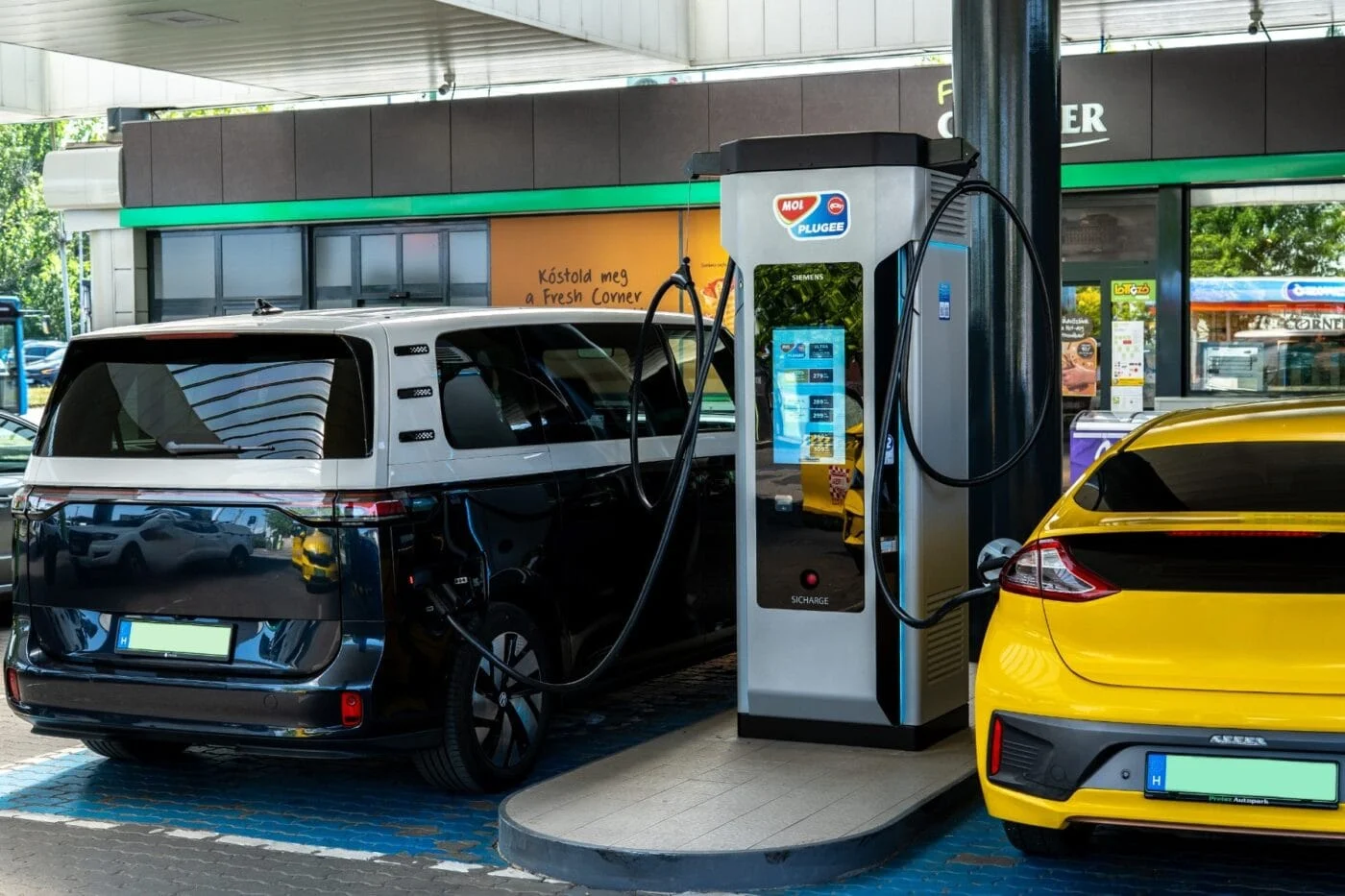
A MOL Plugee site in Hungary. Archive image from 2025. Credit: DKV Mobility, via electrive.
A heatwave and a drought put Hungary's charging networks on rations. The Paks nuclear plant, the country's only one, is running at a fraction of capacity because the Danube is not supplying enough cooling water. Air conditioning then pushes national demand to its annual peak in the early evening. So several operators started capping their own output rather than waiting to be told to.
MOL has limited its Plugee fast chargers, normally rated at 150 kW and up, to 100 kW between 17:00 and 22:00 since the start of August. E.ON Drive Infrastructure Hungary halved the available power at its 300 kW-and-above sites in the same window from 3 August, which the company says releases up to 10 MW of grid capacity. Shell Recharge went further and earlier, capping fast chargers at 150 kW from 16:00 to 22:00 since 5 August and shutting its Tesco car park points off entirely. Metro switches its store chargers off in software daily for the same six hours. EV.app took the other route and left the power alone, charging 420 forints per kWh, roughly €1.16, for sessions started at peak.
Two things are worth pulling out of this. First, the throttling is a software setting on hardware that was already capable of it, which is the whole argument for treating a fast-charging site as a controllable grid asset rather than a fixed load. Second, the response split cleanly into two mechanisms, a hard power cap and a price signal, applied to the same problem by different operators in the same week. That is an unplanned field comparison of the two demand-response designs everyone else is still modelling.
For drivers it reads as longer stops, higher prices, or a dead charger for a few hours. The underlying lesson is less about Hungary than about arithmetic. Not every kilowatt-hour can be delivered at full power at every hour, and the grid decides which ones cannot.
Nio's fifth-generation swap station stopped requiring identical cars
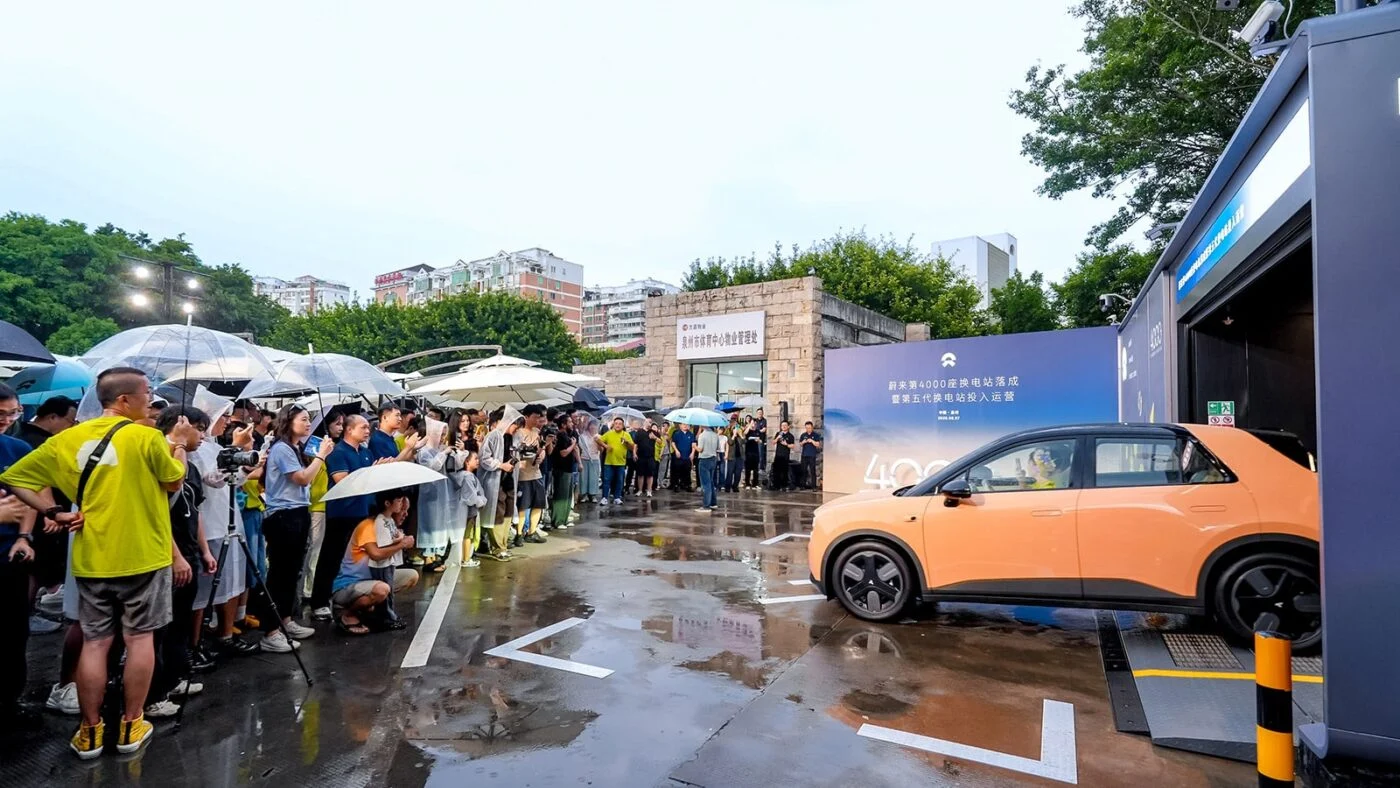
Nio's swap network has now completed more than 120 million swaps. Credit: Nio, via electrive.
Nio opened its first fifth-generation swap stations in Beijing, Shanghai, Guangzhou, Suzhou, Hefei, Chengdu and Quanzhou. The site at Qiaoxiang Gymnasium in Quanzhou is both the first of the new generation and the company's 4,000th swap station in China.
The engineering sits in the swap platform, developed in-house. It reconfigures itself in real time and locates each vehicle's battery mounting points rather than assuming where they are, and it handles wheelbases up to 3.5 metres. That solves a constraint that had been quietly limiting the network: Firefly's roughly four-metre compact car could not use earlier stations because its wheelbase was too short. All three of Nio's brands, Nio, Onvo and Firefly, now share the same infrastructure for the first time.
Swapping is a mechanical alignment problem before it is anything else, and the previous answer was to standardise the vehicles. Generation five inverts that. The station adapts, so the product line does not have to converge on one geometry. That is the difference between a swap network as a single-model accessory and one that can serve a whole group's lineup.
The scale numbers explain why they bothered. Nio completed its 120-millionth swap on 7 August, having passed 100 million in early February, so roughly 20 million swaps in six months. As of that date it ran 4,006 swap stations plus 5,160 charging sites with 29,801 points, covering more than 550 cities, with 1,049 swap stations sitting on motorway routes. In urban areas Nio says 80.1 percent of its users have a swap station within three kilometres of home or work. Europe is not part of this expansion. Nio has slowed its overseas buildout and does not expect vehicles on its 900-volt NT3 platform there before late 2027 or early 2028.
Germany's Altmark lithium project narrows down to one extraction chemistry
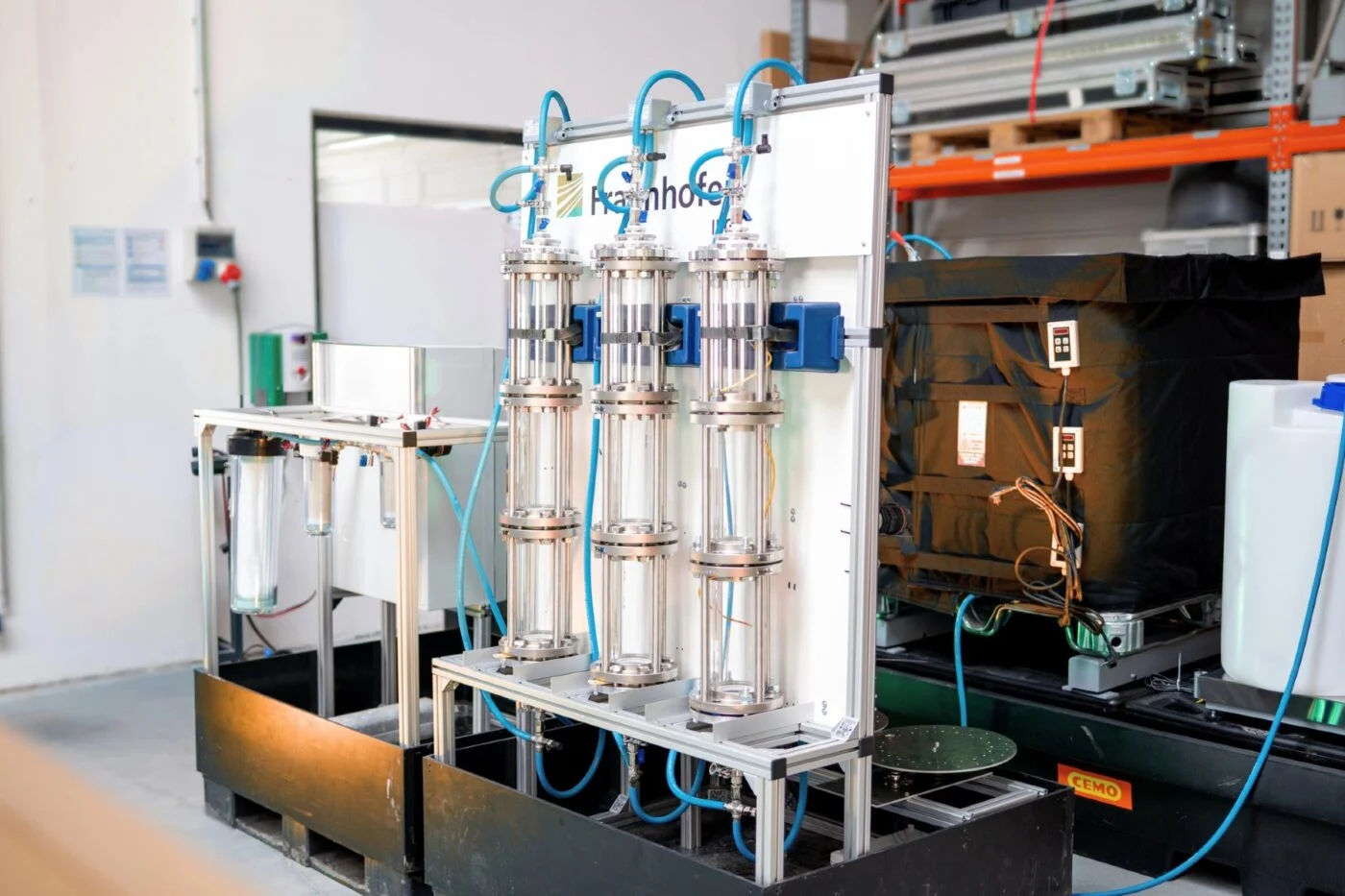
Inside the direct lithium extraction pilot plant. Credit: Neptune Energy, via electrive.
Neptune Energy has started the second pilot phase of its Altmark Lithium Extraction project with Fraunhofer IEG. Phase one was a bake-off. The company tested the direct lithium extraction technologies available worldwide against the specific conditions of Altmark brine, compared ion-exchange and adsorption routes, and picked adsorption. Phase two is the next question down: which adsorbent.
That is the part of DLE that does not generalise. Every brine has its own temperature, salinity and competing-ion profile, so a sorbent that performs on a South American salar can underperform on deep German thermal water. Neptune and Fraunhofer IEG will now run candidate materials through the institute's pilot plant over the coming months. The plant processes up to 1,000 litres of thermal water a day in an oxygen-free environment, and runs three adsorbent columns at once so adsorption and desorption proceed almost simultaneously. Evonik Catalysts supplied the phase-one material and is providing process support on site.
The resource is unusual for Europe. The lithium sits dissolved in thermal water 3,000 to 4,000 metres below northern Saxony-Anhalt, with proven resources of 43 million tonnes of lithium carbonate equivalent. Neptune plans to start commercial production in 2030 and reach up to 25,000 tonnes LCE a year during the decade, which it puts at enough for roughly 500,000 EVs annually. The output leaves the process as concentrated lithium chloride solution, then gets refined to battery-grade carbonate or hydroxide monohydrate.
Worth noting who is doing this. Neptune Energy is an oil and gas producer whose predecessor company has been pulling natural gas out of the Altmark since 1969. The wells, the reservoir data and the deep-fluid handling experience are the same assets either way.
California clears Waymo to more than triple its map
The Ojai, Waymo's sixth-generation platform, is covered by the new permit. Archive image from May 2026. Credit: Waymo, via electrive.
The California Public Utilities Commission approved Waymo's largest service expansion to date, seven months after the company filed for it in January. The permit adds San Diego and Sacramento along with communities across Marin, Napa, Orange and Riverside counties. The approved territory now covers 18 districts, running from Sonoma down to San Diego, and from Sacramento to San Jose. The LA Times reports it more than triples Waymo's operational area around Los Angeles and the Bay Area. Waymo says it will phase the new zones in rather than switching them on at once.
The line worth reading twice is the vehicle approval. The permit covers Waymo's sixth-generation platform, the Ojai, alongside the Jaguar I-Pace fleet. The Ojai is an electric van built with Zeekr, which supplies chassis and body while Waymo installs its own sensors, compute and software. So this is not only a bigger map. It is regulatory clearance for a different sensor and compute stack to carry passengers without a driver, on a vehicle whose hardware comes out of a Chinese supply chain, in a state that has become the de facto rulemaker for the industry.
For scale, Waymo's fleet stood at roughly 3,000 battery-electric I-Paces as of May. The Ojai is meant to complement those rather than replace them.
The UK reopens its ZEV mandate for 2027 through 2035
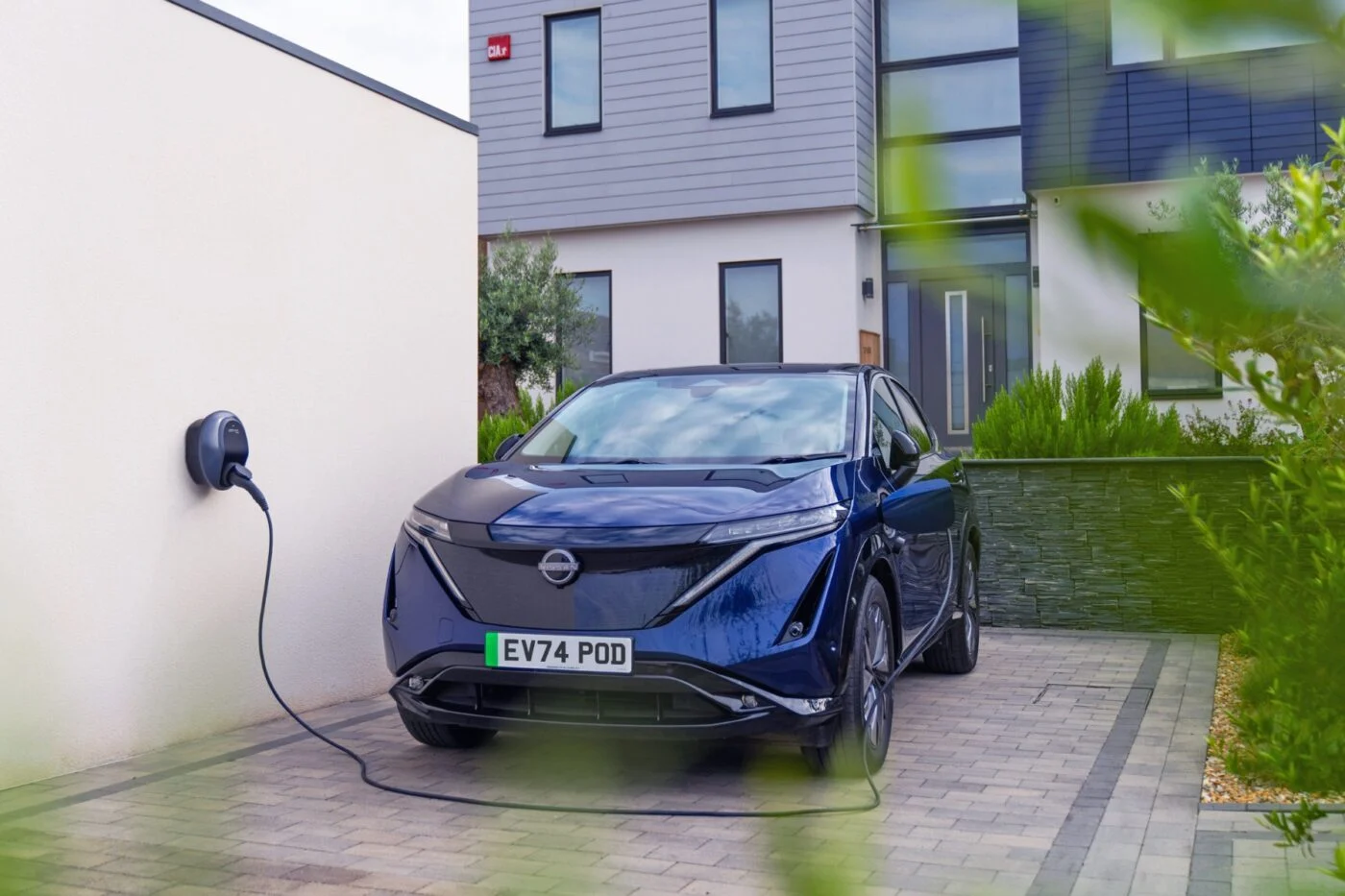
Symbolic image of an EV charging in the UK. Credit: Nissan, via electrive.
The UK government opened a consultation on its Zero Emission Vehicle mandate, covering the target years from 2027 to 2035. Manufacturers, suppliers, charge point operators, dealers and consumers have until 23 October to file responses. The framing from government is that targets should stay "business-friendly and realistic," which is the language of a review that expects to move something.
Here is the ladder under discussion. The mandate started in 2024 requiring 22 percent of a manufacturer's passenger car sales to be battery-electric. It went to 28 percent in 2025 and sits at 33 percent this year. Next year it is 38 percent, then 52 percent in 2028, 66 percent in 2029 and 80 percent by 2030. Nothing is fixed between 2030 and 2035, and a sales ban on pure combustion cars is planned for 2035. Transport Secretary Heidi Alexander says the 2035 date is not in play.
The gap driving this is real. The Society of Motor Manufacturers and Traders reports EVs at about a quarter of UK registrations against a mandate calling for a third, and its chief executive Mike Hawes argues the rule can compel supply but not demand, leaving manufacturers to buy the difference in discounts. The mandate has already been softened once: penalties dropped from £15,000 to £12,000 per non-compliant vehicle, and manufacturers can now pool sales and offset across years.
Not everyone wants it loosened further. Vicky Edmonds of EVA England says the honest question is why demand has not grown, not how to lower the number. Gurjeet Grewal of Octopus Electric Vehicles argues the mandate is what gives manufacturers the confidence to invest at all. Both are making the same structural point from different seats: a quota that moves when it binds stops functioning as a planning input, which is most of what a quota is for.