EV Technology Briefing — compiled and curated by Chris Lee
A seven-minute commercial cell, a Teflon-free electrode, and Dongfeng’s solid-state timeline
Week of July 1–8, 2026
Three stories this week, all about building better batteries at scale rather than proving them in a lab. CATL put an 8C fast-charging cell on delivery vans. A Korean lab pulled a forever-chemical out of dry-electrode manufacturing. Dongfeng attached hard dates to when its solid-state cells reach real cars.
Fast Charging
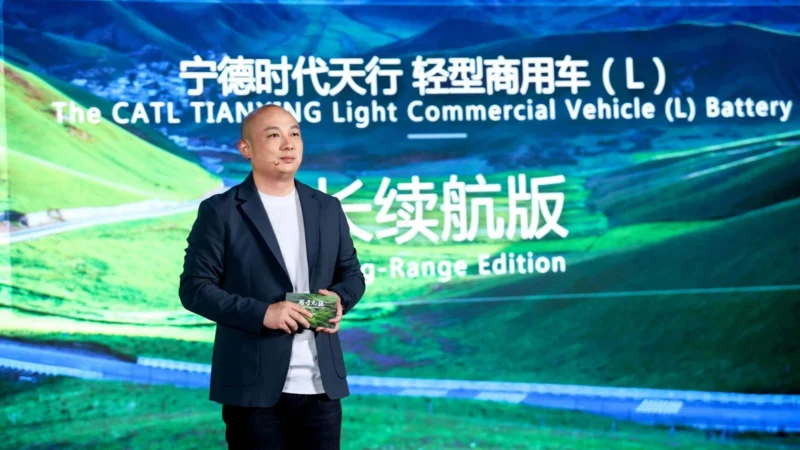
CATL’s Tectrans II charges light commercial EVs from 20% to 80% in under seven minutes
CATL’s Tectrans II (Tianxing II) LFP pack targets light commercial EVs at an 8C peak charge rate. Credit: CATL, via CarNewsChina.
CATL introduced Tectrans II (Tianxing II), an LFP pack built for light commercial vehicles, micro-vans and light trucks that peaks at an 8C charging rate. The company puts a 20% to 80% top-up at 6 minutes 48 seconds and a full charge at 8 minutes 56 seconds, with roughly 2.5 minutes added when charging at −20°C. It carries a 10-year or 1,000,000 km warranty.
The main engineering claims are around internal resistance and low-temperature behavior. CATL says cell internal resistance is cut to about half the industry average, which is what lets a lithium iron phosphate chemistry sustain such high charge currents without excessive heating. The cells use what CATL describes as atomic-level interface reconstruction on the graphite particles to limit lithium loss, plus a self-heating pulse method that warms the pack in the cold without a separate external heater.
The target market matters here. Commercial vans and light trucks live or die on uptime, so cutting a mid-shift charge to under seven minutes changes the duty-cycle economics more than it would for a passenger car. These are company figures rather than independent test results.
Korean labs remove PTFE from dry battery electrodes using spray-dried graphite granules
KIMS and KERI replaced PTFE with a water-based CMC-SBR binder and spray-dried graphite into isotropic granules. Credit: Getty Images, via Interesting Engineering (representative image).
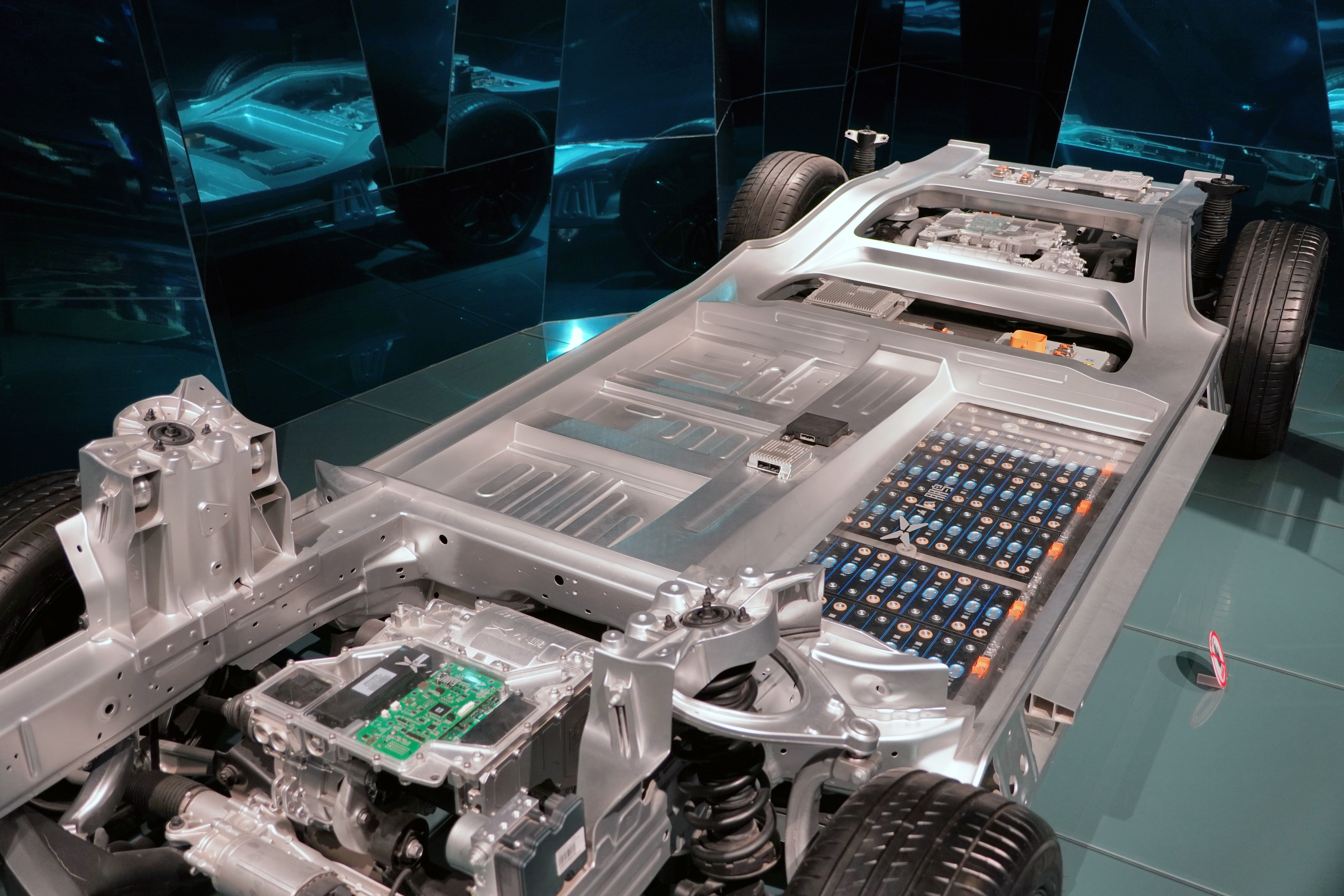
Researchers at the Korea Institute of Materials Science (KIMS), with the Korea Electrotechnology Research Institute (KERI), reported a dry-electrode process that drops polytetrafluoroethylene, a PFAS “forever chemical” that most dry-electrode lines rely on as a binder. In its place they use the CMC-SBR binder system already standard in conventional wet slurry manufacturing, so the approach fits existing chemistry rather than requiring a new one.
The method spray-dries graphite into composite granules that pack into randomly oriented, isotropic structures instead of the highly aligned layers a normal calendered electrode produces. That random arrangement opens multidirectional lithium-ion paths, including through-plane transport across the full thickness of the electrode. Ion transport through the thickness is the usual bottleneck in thick, high-loading anodes, so reducing it is what the team credits for better fast-charging behavior and longer cycle life versus slurry-cast anodes.
The work was published in Energy Storage Materials, with Jihee Yoon at KIMS and Insung Hwang at KERI named on the research. Dry processing also cuts the energy and solvent handling of wet coating, and removing PTFE sidesteps tightening PFAS rules.
Dongfeng sets a solid-state ramp of 100 demo cars this year and 50,000 by 2027
Dongfeng’s in-house solid-state cells are rated at 350 Wh/kg, running on a 0.2 GWh pilot line. Credit: CnEVPost.
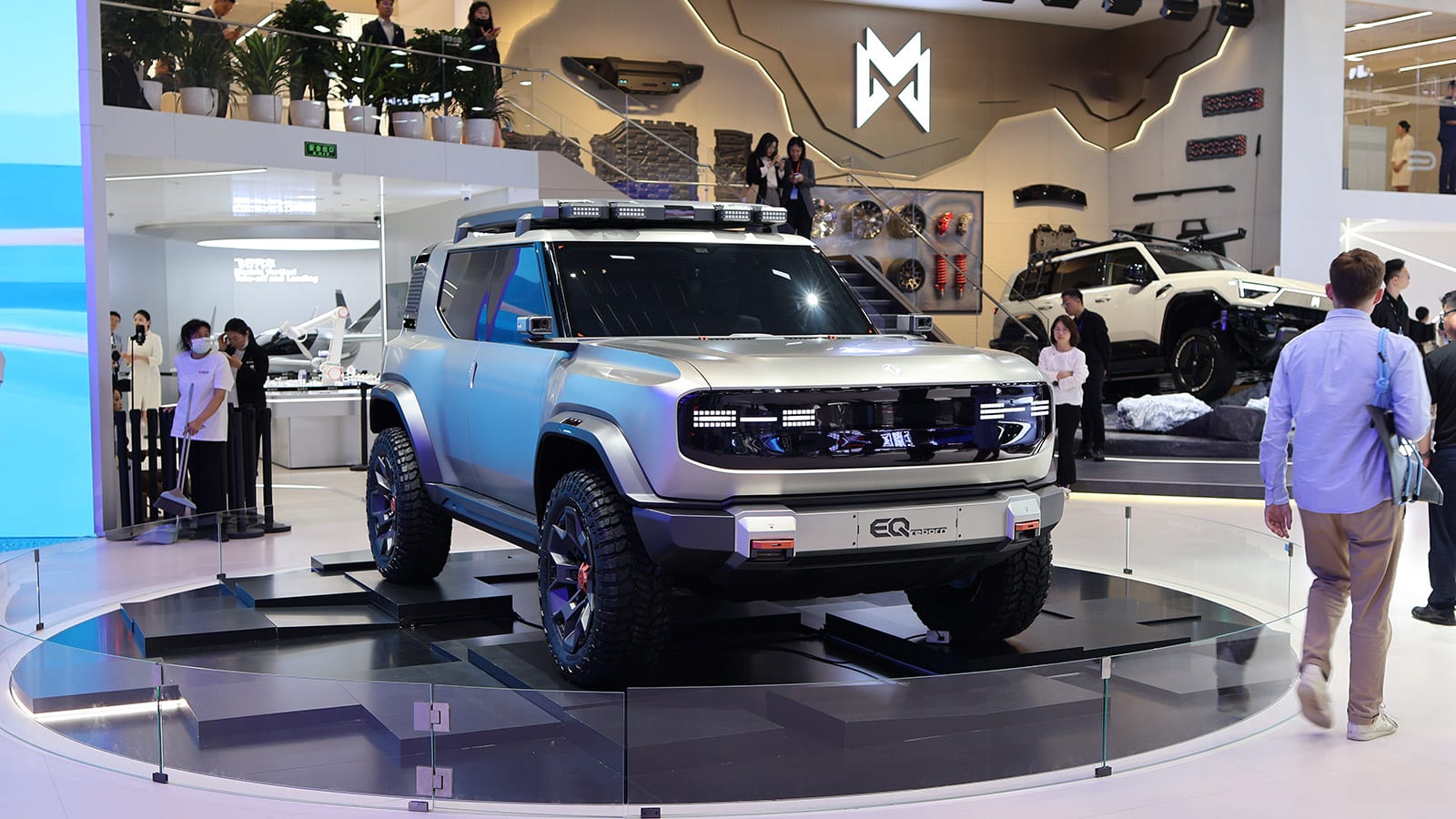
Dongfeng laid out an industrialization timeline for the solid-state batteries it is developing in-house, aiming for 100 demonstration vehicles by the end of 2026, 50,000 units in 2027, small-scale mass production around 2030, and broad adoption by 2035. The cells are rated at 350 Wh/kg, roughly double the 140 to 210 Wh/kg of mainstream LFP packs, and the company ties them to vehicle range past 1,000 km with a faster-charging variant slated for 2027.
What makes this a supply-chain story rather than a lab result is the tooling behind it. Dongfeng’s Advanced Technology Research Institute says it built the electrodes, the solid electrolyte, and full pack integration itself, stood up a solid-state battery lab in June 2025, and has a 0.2 GWh pilot production line already running. It finished winter vehicle testing in January 2026 and is targeting in-vehicle application in the fourth quarter of 2026.
A 0.2 GWh pilot line is small next to the multi-GWh plants that make today’s lithium-ion packs, and the gap between 100 demonstration cars and 50,000 units is where most solid-state programs stall on yield and cost. Keeping electrolyte and cell development in-house is Dongfeng’s hedge against a supply base that does not yet exist at scale.