EV Technology Briefing — compiled and curated by Chris Lee
CATL cools the solid-state hype, UC San Diego upcycles old LFP, and a charger that shares 800 kW
Week of June 24 – July 1, 2026
The week’s throughline is patience. CATL’s chairman put a number on how far all-solid-state still has to go. UC San Diego showed retired LFP cells can be rebuilt into a better chemistry instead of shredded for metals. And a Kentucky charging site pointed to where fast-charging hardware is heading: shared power, not one cabinet per stall.
Solid-State Chemistry
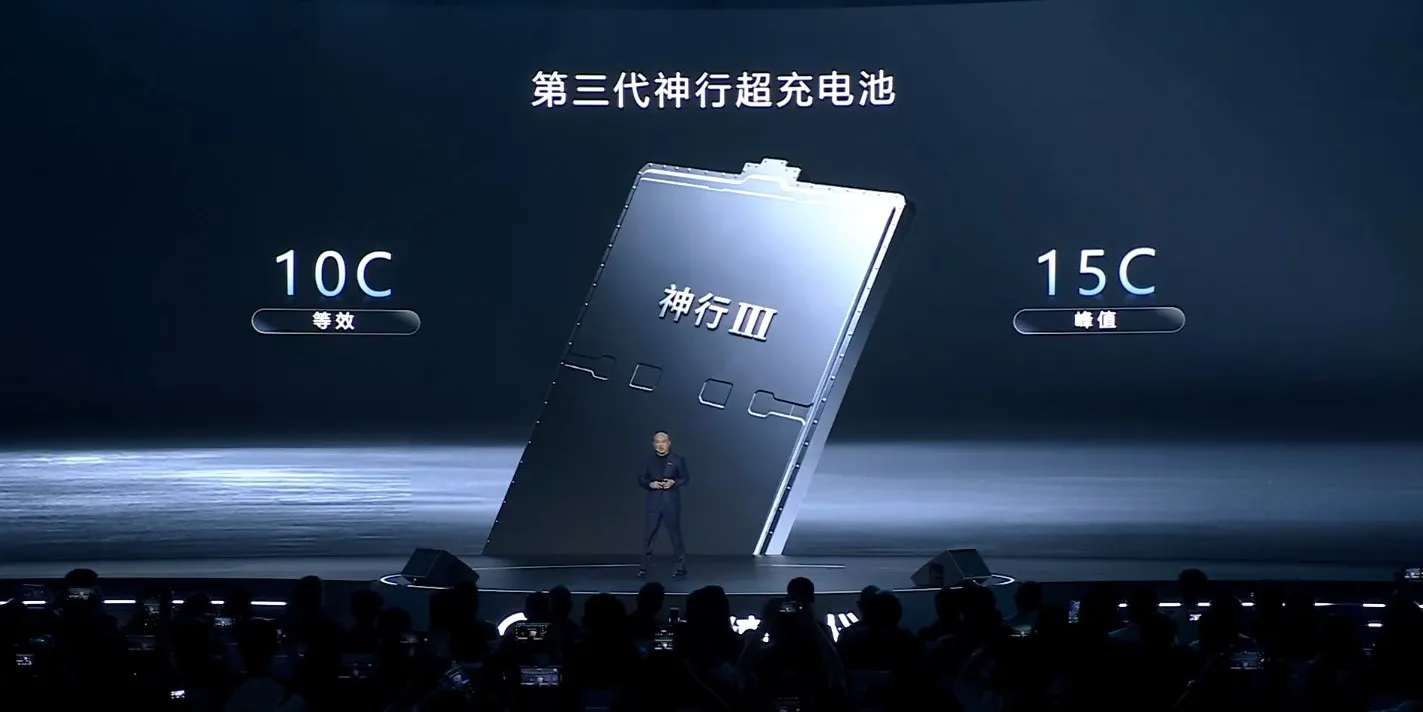
CATL’s chairman puts all-solid-state at ‘level four of nine’ and mass production after 2030
CATL chairman Robin Zeng rated all-solid-state at level four of nine, with pilot cells near 500 Wh/kg. Credit: CATL, via Electrek. (Image is a file photo of a CATL cell.)
CATL chairman Robin Zeng put the company’s all-solid-state battery program at “level four” on a nine-step technology-readiness scale, and said genuine mass production is unlikely before 2030. Small-scale output of roughly 5 GWh is targeted for 2027. Pilot all-solid-state cells reach about 500 Wh/kg, roughly double the energy density of today’s best liquid-electrolyte packs, because a solid electrolyte lets the cell run a lithium-metal anode without a flammable liquid.
Zeng drew a sharp line between all-solid-state cells and the semi-solid batteries already shipping, which still contain some liquid electrolyte. Those semi-solid packs are in NIO’s 150 kWh pack, IM Motors’ 130 kWh pack, and SAIC’s MG4.
CATL controls about 40% of the global EV battery market, so its timeline carries weight. BYD and Toyota have floated 2027 to 2028 for solid-state vehicles, but Zeng’s assessment pushes realistic mass availability toward the end of the decade.
UC San Diego turns spent LFP cathodes straight into higher-energy LMFP
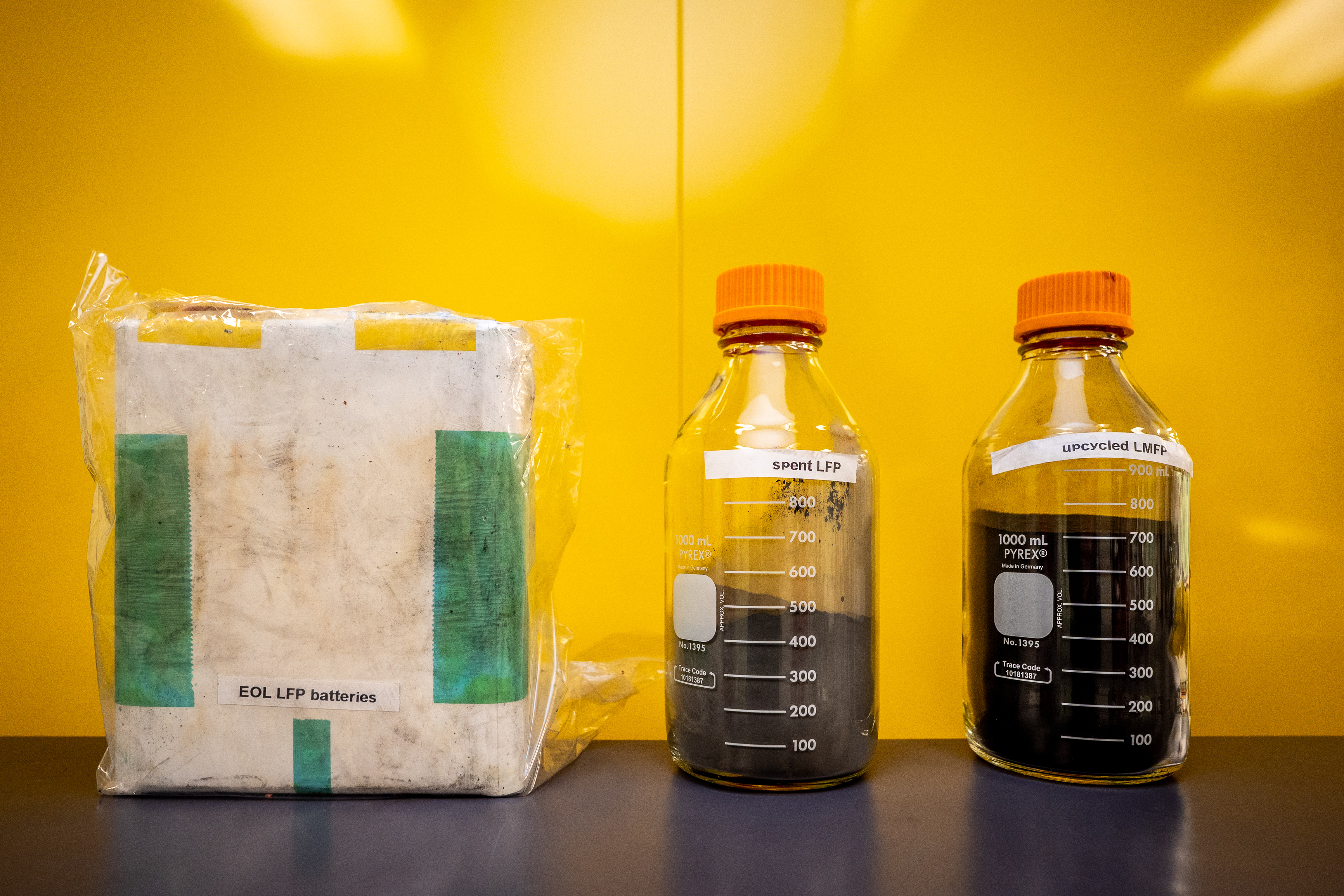
UC San Diego’s process converts retired LFP cathode powder into single-phase LMFP with a carbon coating. Credit: David Baillot / UC San Diego Jacobs School of Engineering, via Newswise.
A team at UC San Diego, publishing in Joule, demonstrated a way to upcycle spent lithium iron phosphate (LFP) cathodes into lithium manganese iron phosphate (LMFP), a higher-energy chemistry, rather than breaking cells down to extract raw metals. The process unrolls the electrode “jelly roll,” separates the cathode coating from the aluminum foil in water, dries it to a powder, mixes in lithium, manganese, and phosphate salts, then grinds and heats the mixture.
The obstacle was that LFP and LMFP have incompatible crystal structures, so the two do not mix cleanly. The group got around it by first forming an intermediate lithium manganese phosphate that matches LFP’s structure. As heating continues, manganese gradually substitutes for iron to yield single-phase LMFP with a protective carbon coating.
The upcycled material stores more energy than the original LFP while keeping its durability and safety, works on spent cells from different manufacturers, and was shown at kilogram scale in both coin cells and the larger pouch cells used in commercial EVs. The work was led by postdoctoral researcher Wei Li and professor Zheng Chen.
Kempower and PowerUp America open the first of 12 sites sharing 800 kW dynamically
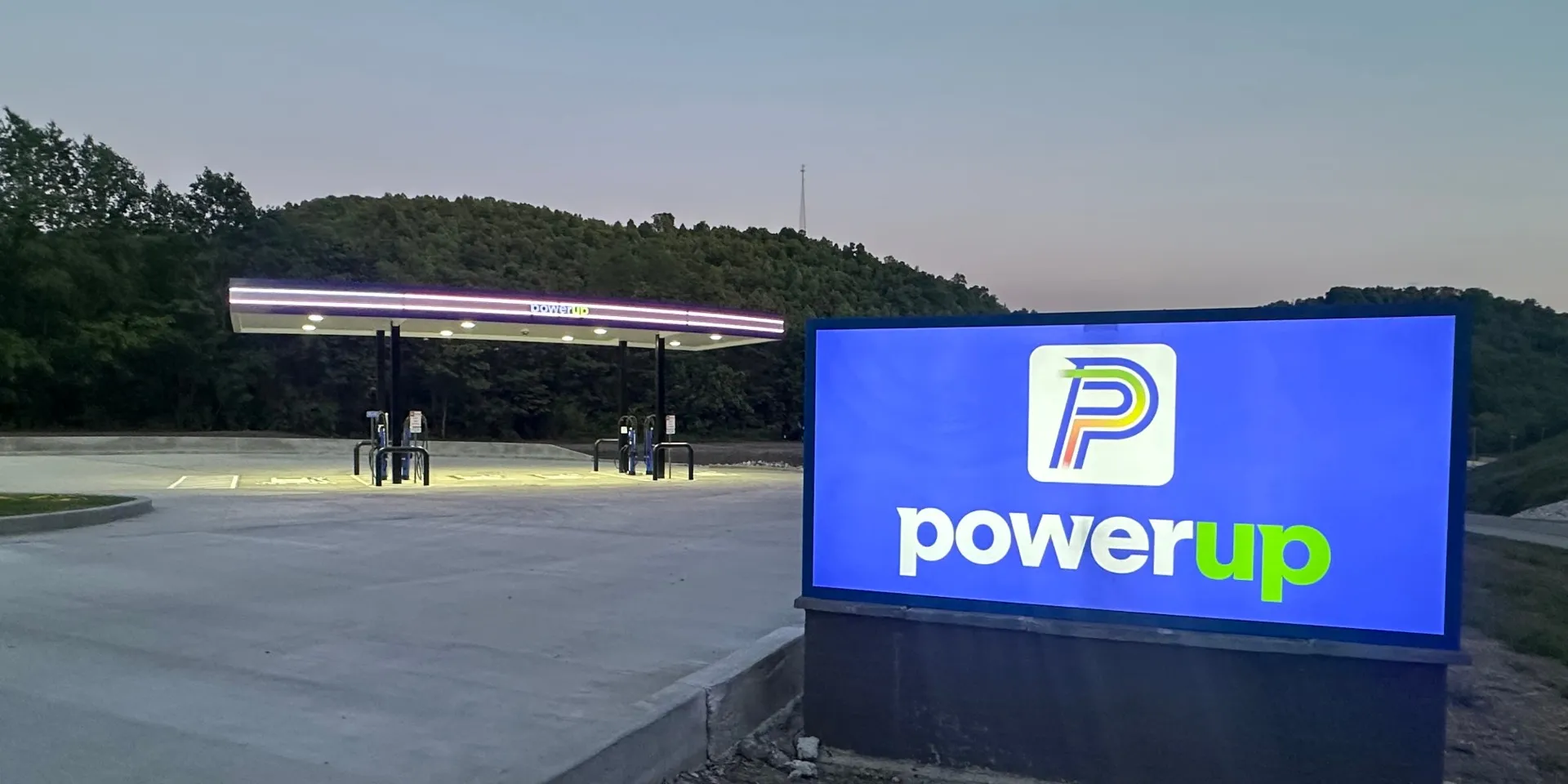
Four Kempower Flex Satellite units share up to 800 kW at the Manchester, Kentucky site. Credit: Kempower, via Electrek.
Kempower and PowerUp America opened the first location in a planned 12-site fast-charging network, in Manchester, Kentucky. The site runs four Kempower Flex Satellite units delivering up to 800 kW of combined power, with both NACS and CCS1 connectors, pull-through bays sized for vehicles that are towing, and 24/7 operation.
The Flex Satellite architecture is the technical point. A central power cabinet feeds several thin “satellite” dispensers and shifts power dynamically to whichever cars are actually drawing current, so a vehicle that cannot accept full power does not strand capacity that another car could use.
Eleven more sites are under development in Georgia. The rollout is a practical example of distributed, power-sharing DC hardware replacing the older one-cabinet-per-stall model.