EV Technology Briefing — compiled and curated by Chris Lee
A sodium-cell teardown, QuantumScape’s manufacturing shortcut, and Volvo turns on Plug & Charge
Week of June 17–24, 2026
Three stories about the gap between a working cell and a shippable product. German researchers pulled apart 120 Chinese sodium-ion cells and found the manufacturing was already excellent. QuantumScape is betting on process tricks, not just chemistry, to make solid-state at scale. Volvo’s Plug & Charge rollout shows how much standards-and-compute plumbing has to line up before charging just works.
Sodium-Ion Chemistry
A teardown of Chinese sodium-ion cells finds Tesla-grade quality and a cold-charging weakness
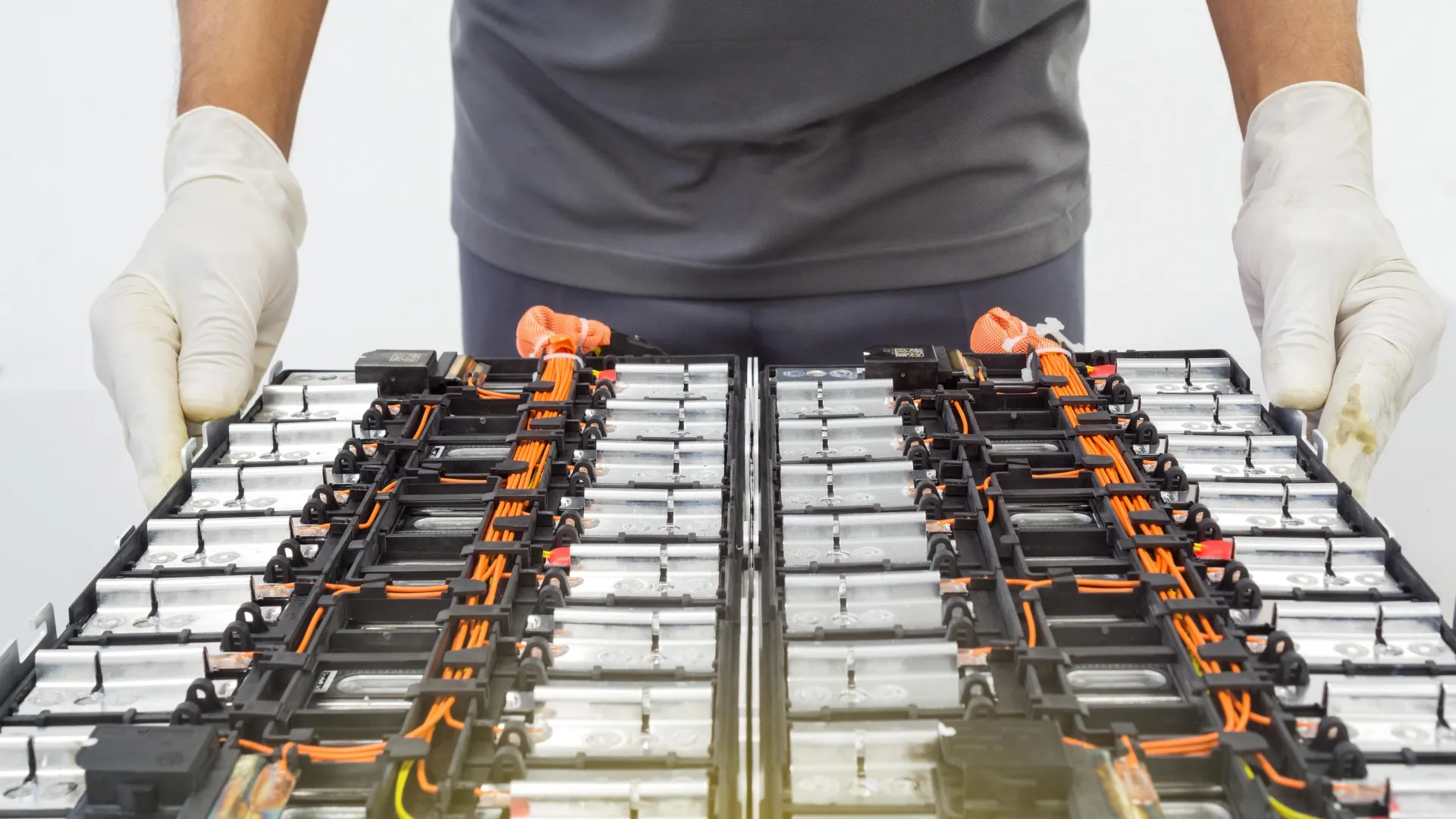
RWTH Aachen characterized 120 Hina Battery sodium-ion cells across −20°C to 45°C. Credit: Shutterstock, via ScienceDaily. (Stock image, not the tested cells.)
Researchers at RWTH Aachen University in Germany ran a detailed characterization of 120 commercial sodium-ion cells from the Chinese maker Hina Battery, using impedance spectroscopy and cycling across a −20°C to 45°C range at varying current levels. The manufacturing uniformity across the sample matched what the group has measured on Tesla lithium-ion cells, and a tabless design with a double-aluminum current collector cut internal resistance and evened out heat distribution.
The cells fell short in two areas. Charging at low temperature was a clear weak point, and volumetric energy density stayed below leading lithium-ion cells, which keeps sodium-ion aimed at cost-sensitive and stationary use rather than long-range EVs. The teardown also turned up unexpectedly high and unevenly distributed copper concentrations in parts of the cathode, a manufacturing signature the authors flagged for follow-up.
The work was led by Moritz Schütte and published in Cell Reports Physical Science. The team said its next steps are improving sub-zero charging and testing hard-carbon anodes and reworked electrolyte formulations.
QuantumScape leans on a self-forming anode and Corning ceramic ribbon to cut solid-state steps
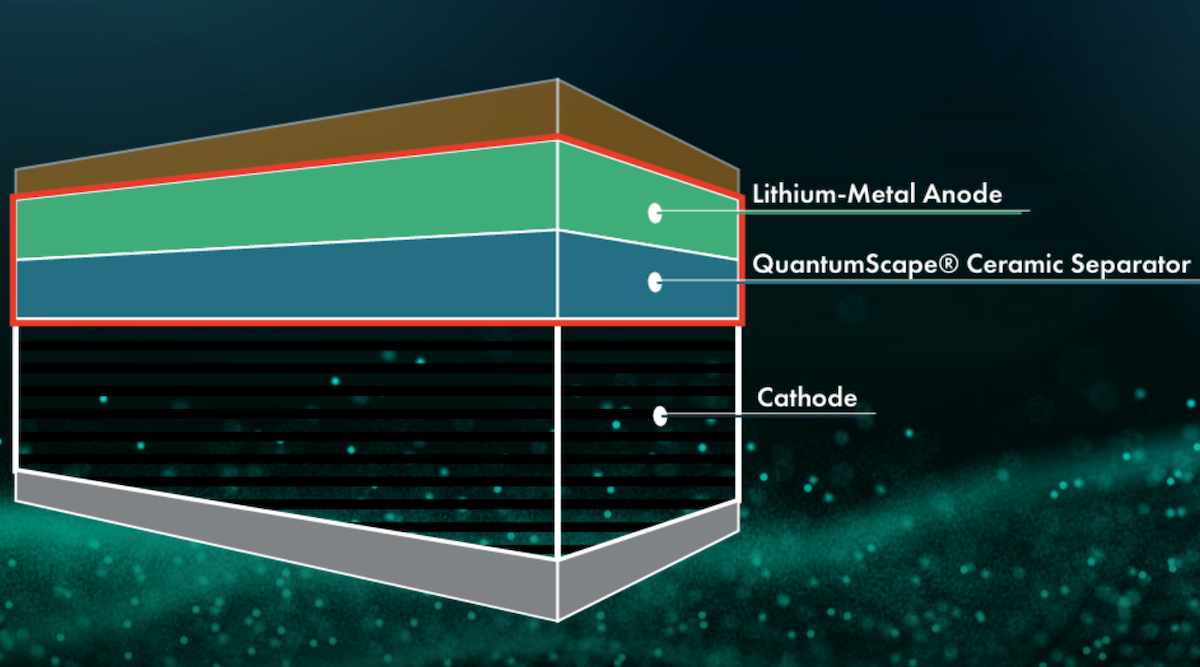
QuantumScape’s cell forms its lithium-metal anode on first charge and uses Corning’s roll-to-roll ceramic separator. Credit: QuantumScape, via CleanTechnica.
QuantumScape’s solid-state cell replaces the flammable liquid electrolyte of a conventional lithium-ion battery with a ceramic solid electrolyte, which raises the ceiling on energy density and lowers fire risk. The manufacturing angle is what stands out. Rather than depositing a lithium-metal anode during production, the design lets the anode self-form on the first charge, removing a costly fabrication step.
The company’s tie-up with Corning brings a Ribbon Ceramics roll-to-roll process for making the ultra-thin ceramic separator sheets that solid-state lithium-metal cells depend on, a known bottleneck for scaling this chemistry. QuantumScape is developing the cells with Honda as a lead automotive partner.
The piece places these moves against a broader field of players chasing manufacturable solid-state and next-gen cells, including Factorial Energy, Ensurge, Anthro Energy, and Dragonfly Energy, framing 2026 as the year the sector’s focus shifts from lab performance to production yield.
Volvo switches on ISO 15118 Plug & Charge for the EX90, but only newer-compute cars qualify
Plug & Charge on the EX90 needs the newer NVIDIA Orin compute; not every existing car can be enabled by software alone. Credit: Volvo, via Electrek.
Volvo activated Plug & Charge on the EX90, letting the car handle authentication and payment automatically over the charging cable at participating stations, with no app or card needed. The feature is built on the ISO 15118 standard, where the vehicle and charger exchange a signed certificate to authorize the session as soon as the connector seats.
There is a hardware gate. Volvo says 2025 EX90 models need the newer NVIDIA Orin/Orin Core computer configuration to run the feature, so not every existing car can be enabled by software alone. On the physical side, the EX90 uses CCS1 ports and relies on NACS-to-CCS1 adapters for Tesla Supercharger and IONNA sites, while the coming EX60 will ship with native NACS ports.
The rollout is a small but concrete example of the standards-and-compute plumbing that has to line up before frictionless charging works across mixed CCS and NACS networks.