EV Technology Briefing — compiled and curated by Chris Lee
Solid-state hits public roads, Ford ships US-built LFP, and a charger that runs off a 1.9 MW battery
Week of June 10–17, 2026
This week the news moved out of the lab. Factorial and Stellantis drove solid-state cells on public roads in North America for the first time. Ford shipped its first domestically built LFP cells for a cheap pickup. And Electrify America solved a grid-capacity problem with a big on-site battery instead of a bigger utility connection.
Solid-State Chemistry
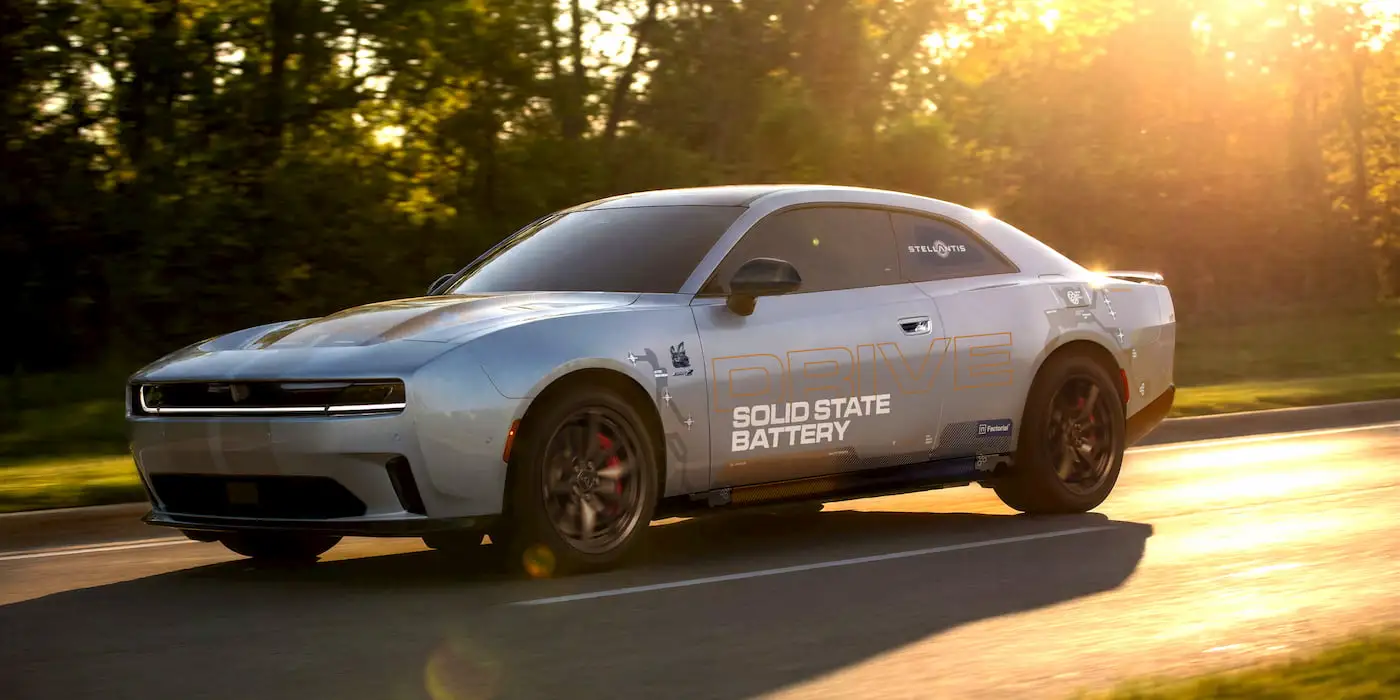
Factorial and Stellantis put solid-state cells on public roads in a Dodge Charger Daytona
Factorial’s 375 Wh/kg FEST cells, running in a Stellantis Dodge Charger Daytona test car. Credit: Factorial Energy, via Electrek.
Factorial Energy said it began road testing its FEST (Factorial Electrolyte System Technology) solid-state cells integrated into a Dodge Charger Daytona development vehicle with Stellantis, which it called the first on-road testing of solid-state batteries in an integrated EV in North America. The 77Ah cells run at 375 Wh/kg, enough for a claimed 600-plus miles of range and roughly a 50 percent gain over comparable lithium-ion packs.
On the performance side, Factorial reports charging from 15 to 90 percent in about 18 minutes, discharge rates up to 4C, and more than 600 cycles across an operating window of −30°C to 45°C. FEST pairs a lithium-metal-style architecture with Factorial’s proprietary electrolyte to reach those numbers at automotive cell size, which is the harder problem than lab coin cells.
CEO Siyu Huang framed the milestone as validation that the chemistry can survive real drive cycles and temperature swings rather than a bench.
Ford ships its first US-built LFP cells from BlueOval Battery Park for a $30,000 pickup
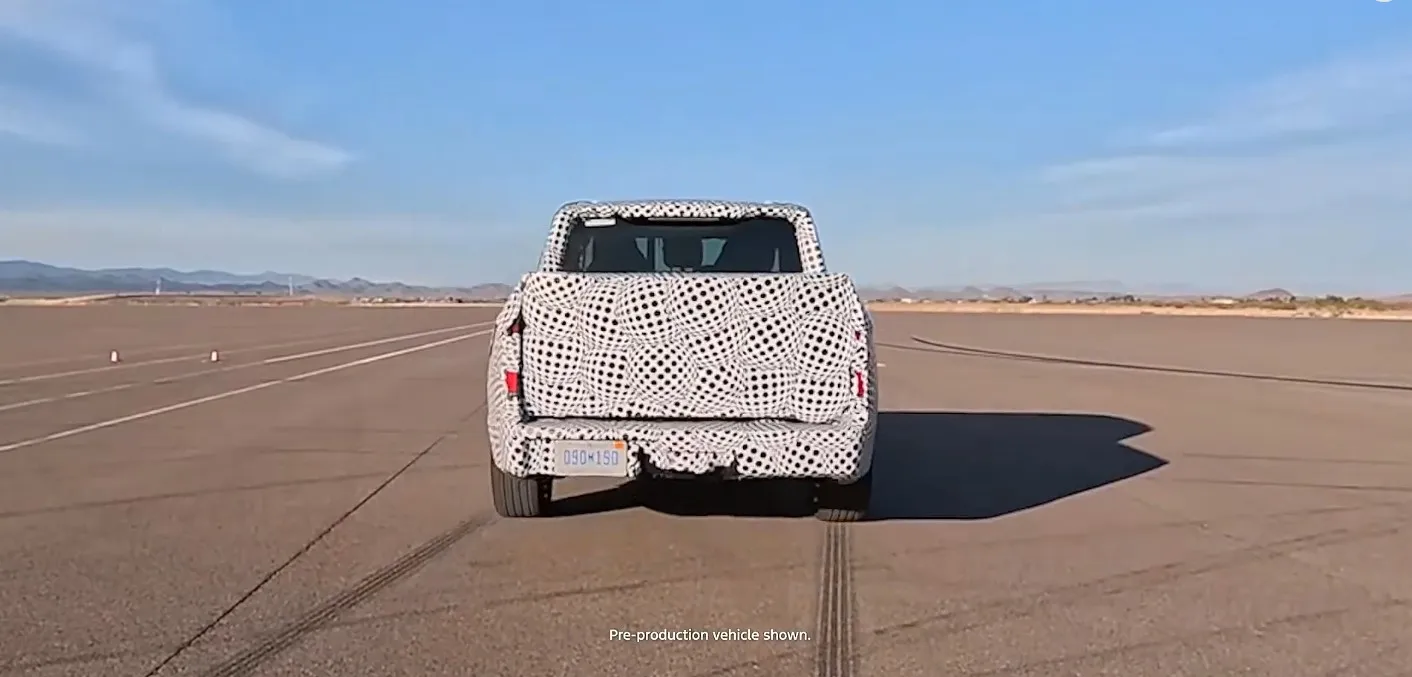
Ford’s first domestic LFP prismatic cells, headed for a sub-$30,000 midsize pickup at 2027 launch. Credit: Ford, via Electrek.
Ford said it delivered its first full lithium iron phosphate prismatic cells from its BlueOval Battery Park in Michigan on June 17, with the CEO claiming it is the first US company to ship LFP cells for mass-market automotive use. The line runs on battery and manufacturing technology licensed from China’s CATL, and the cells are destined for an affordable midsize electric pickup targeting a $30,000 starting price at its 2027 launch.
LFP chemistry drops nickel and cobalt in favor of iron and phosphate, which lowers cost and improves cycle life and thermal stability at the expense of gravimetric energy density.
Building the cells domestically also reduces exposure to tariffs and sourcing rules on a battery type whose supply base is still concentrated in China, which is the practical reason a licensed-tech US plant matters for hitting the sub-$30,000 target.
Electrify America opens its largest battery-buffered charging hub in a former bus depot
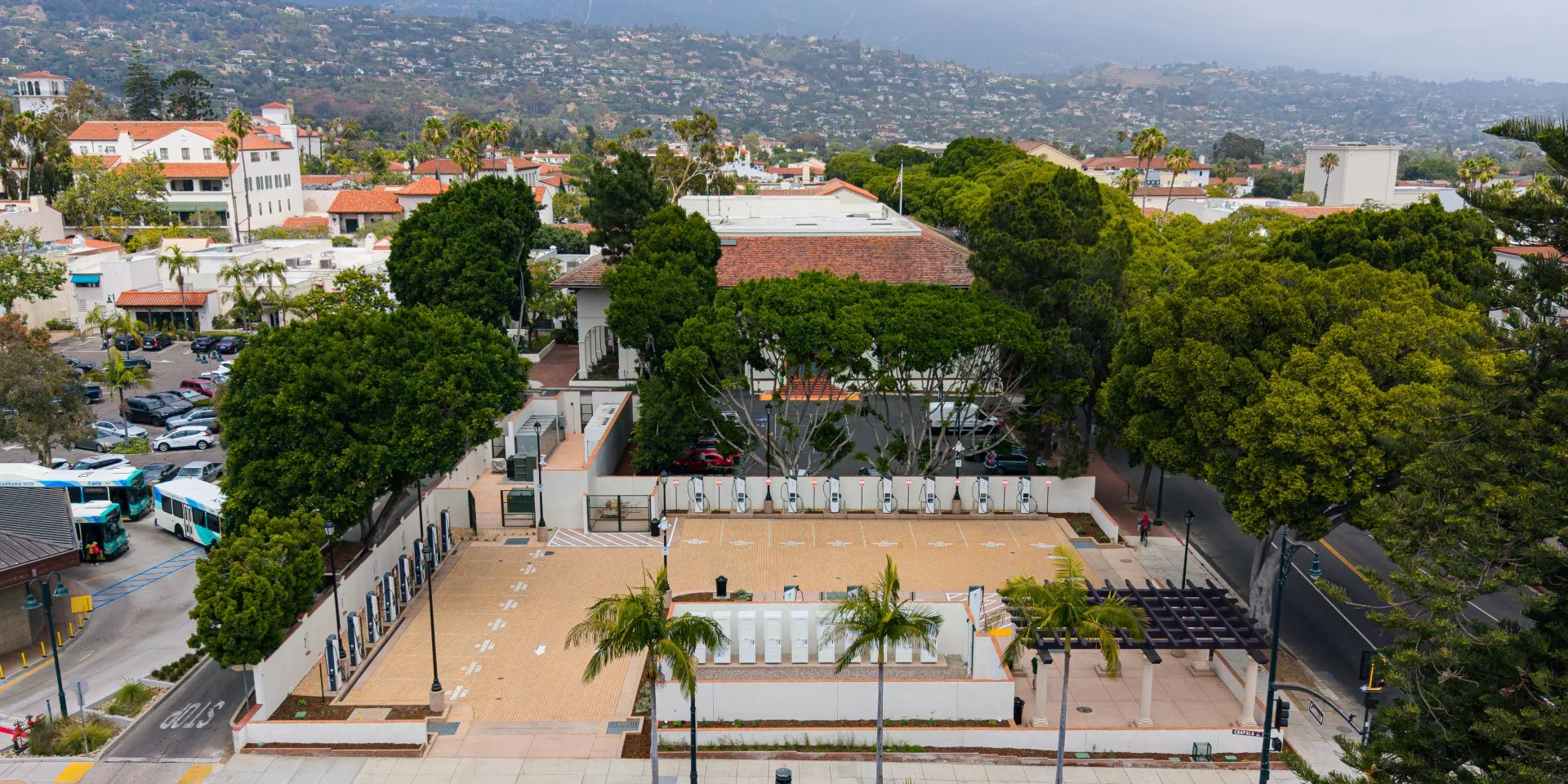
Twenty 350 kW stalls in Santa Barbara, buffered by a 1.9 MW battery so the grid tie does not cap them. Credit: Electrify America, via Electrek.
Electrify America opened what it calls its largest public battery-backed charging site, at a former Greyhound depot on West Carrillo Street in Santa Barbara. The station has 20 DC fast chargers rated up to 350 kW, buffered by a 1.9-megawatt battery energy storage system.
The on-site battery lets the hub deliver high-power charging at a location where grid service would otherwise cap it, drawing a steady load from the utility and discharging the storage system to cover simultaneous 350 kW sessions. All 20 stalls currently use CCS connectors, with a plan to convert some to NACS later in summer 2026.
Company president Rob Barrosa said the storage approach makes hyper-fast charging viable at sites that have been hard to serve on grid power alone.