Disneyland's transforming pirate broke down on the Fourth of July, and was running again by morning
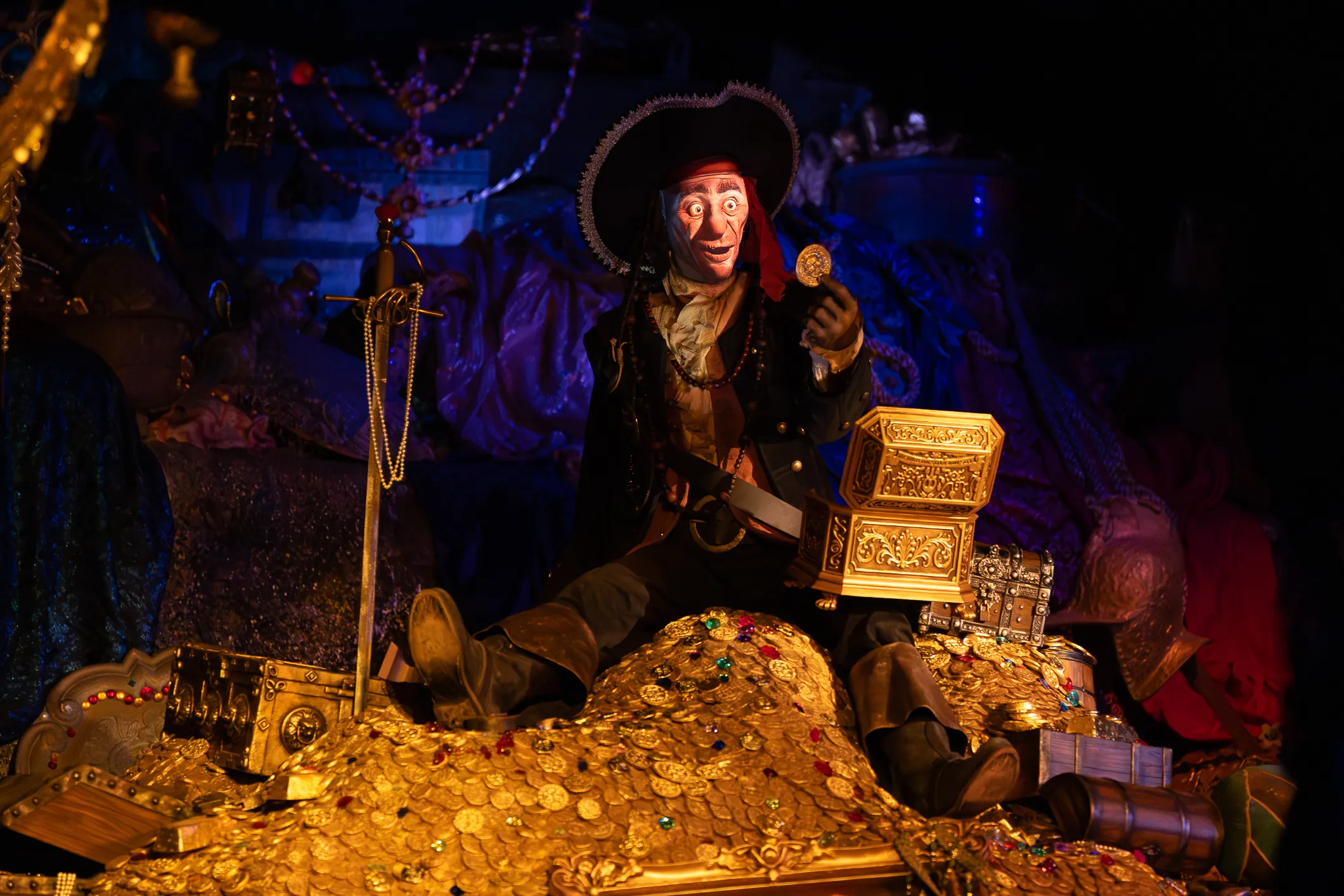
Disneyland reopened Pirates of the Caribbean on June 26 with something the ride had never had: a pirate who physically transforms. The figure sits atop a pile of cursed gold in the treasure grotto, lifts a coin, and watches his own face rot into a skull before his arm drops the coin and the curse breaks. It runs on real-time front projection mapping onto a rigid 3D-printed facial shell, driven by Unreal Engine.
On the morning of July 4 it stopped. Guests floating through the grotto found the figure frozen, its projections and audio dead, with a physical skull mask fitted over it so it read as a plain static skeleton for the holiday crowds. By the time the park opened on July 5, the projection system was restored and the pirate was back to his loop.
The breakdown is worth a look for the engineering choice behind it. Imagineering built this figure around a rigid printed shell tracked by projectors rather than a silicone skin and dozens of micro-motors. The bet is that fewer moving parts means less physical maintenance over time. A projector-and-tracking rig has its own failure modes, as the Fourth showed, but those tend to be a reboot rather than a mechanical teardown.
Walt Disney's Carousel of Progress closes for a full rebuild, with a Walt animatronic to open the show
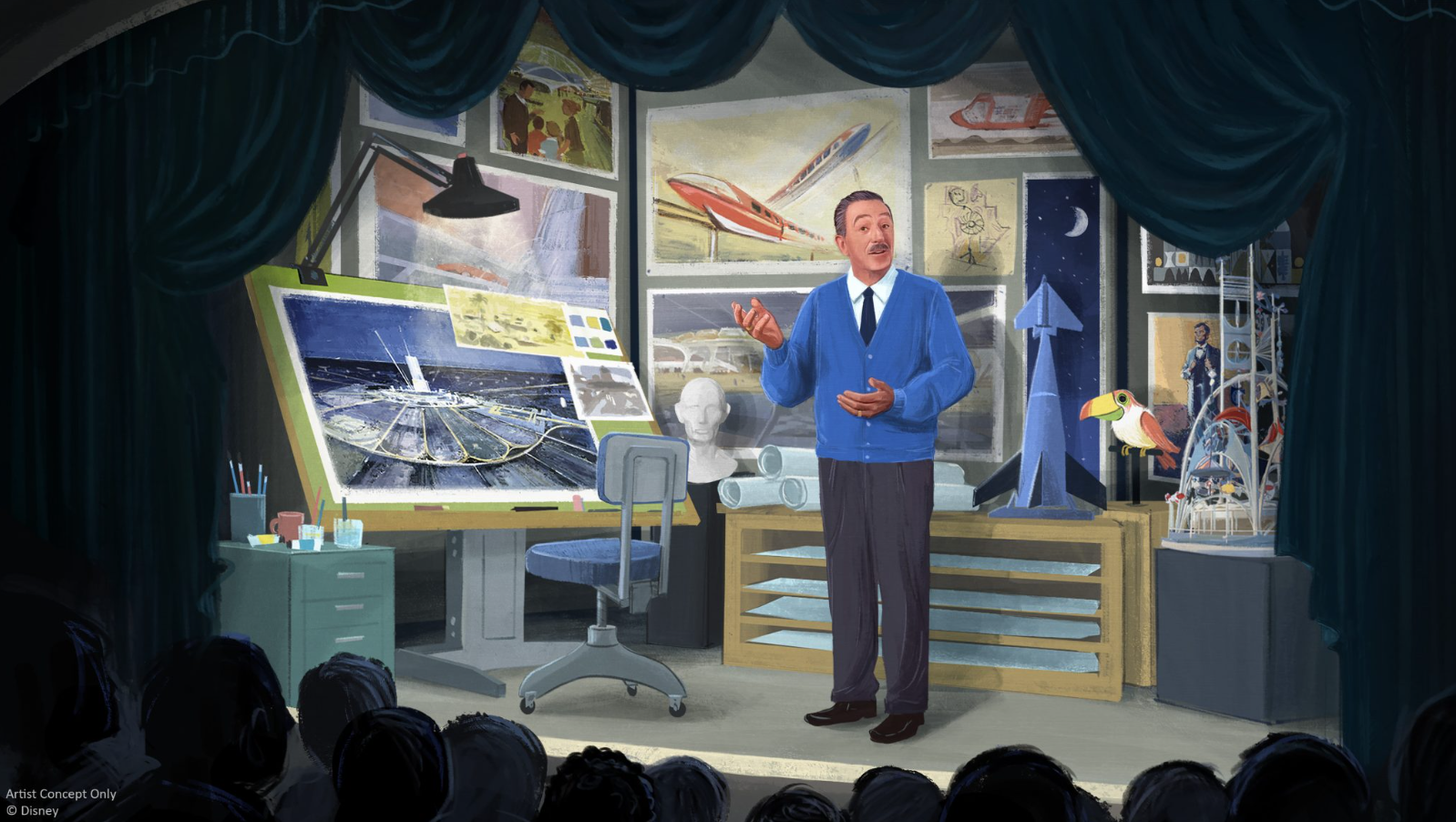
Walt Disney's Carousel of Progress ran its current version for the last time on July 5. As of July 6 it's down for a rebuild that goes well past a refurbishment. Disney is replacing all four show scenes, adding new Audio-Animatronics and sets, and keeping the parts that define the attraction: the family, the theme song, and the through-line of progress.
The headline addition for animatronics is a new figure of Walt Disney himself in a reworked opening scene, set in the 1964 World's Fair era where he first introduced the ride. The updated scenes push the timeline forward — the 1969 moon landing, a 1980s Halloween, New Year's Eve 1999, and a new "distant future" finale. It isn't expected back until sometime in 2027.
Frozen Ever After drops its projected faces for sculpted ones
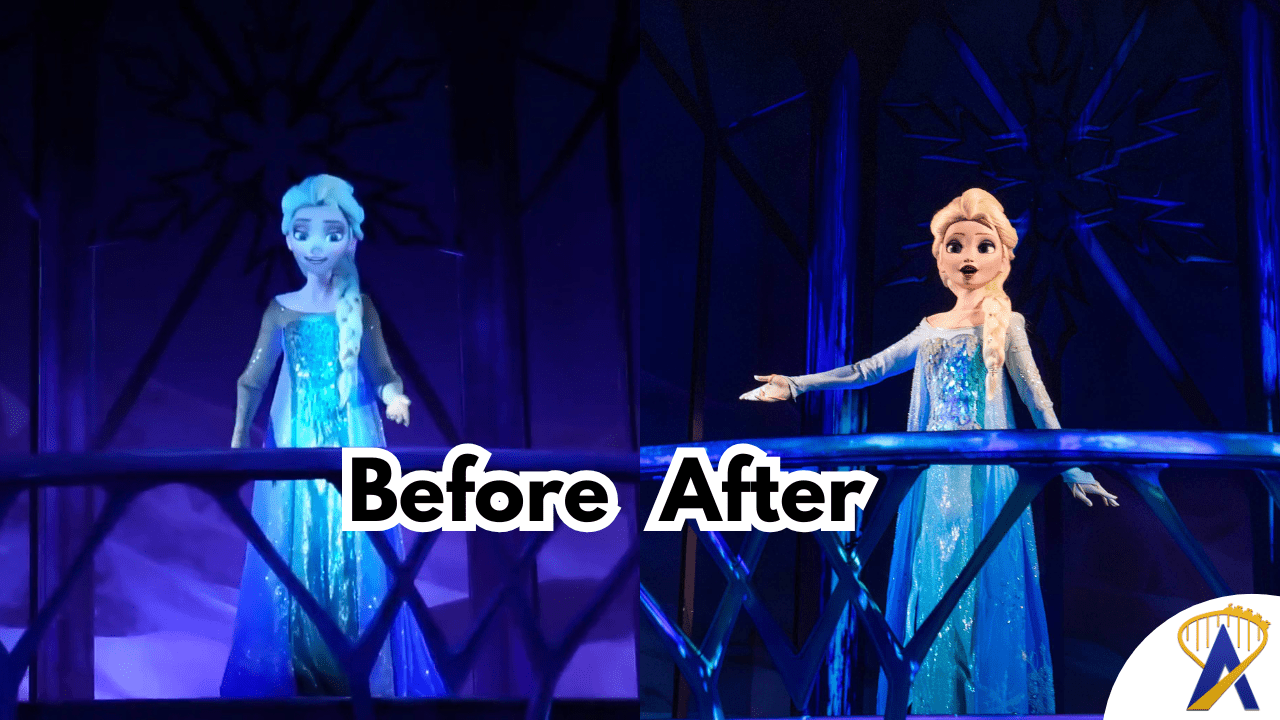
Epcot's Frozen Ever After reopened February 11 after a few weeks down, and the change is one animatronics people have wanted since 2016. The original ride used projected faces for Elsa, Anna, and Kristoff. The new figures use fully sculpted faces, matching the version that opened at Hong Kong Disneyland in 2023.
The upgrade runs deeper than the faces. These figures use silicone skin, more articulated movement, and 3D-printed eyes with a glaze that catches light, the same high-fidelity approach Disney used on Tiana's Bayou Adventure. It's a clear signal of where Disney is placing its bets: sculpted, silicone-skinned figures for close-up character work, even while it leans into projection for the transforming-pirate case up in the grotto.
Universal patents an animatronic that walks along a track
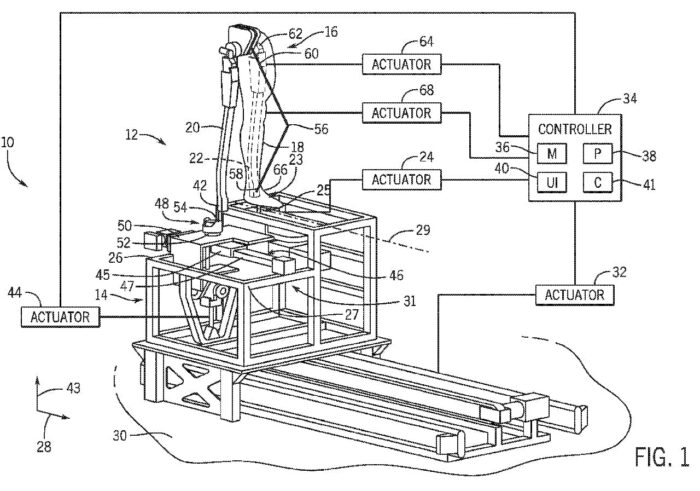
Universal filed a patent called "Animated Figure Walking Mechanism" that describes a figure engineered to look like it's walking. It isn't a free-roaming robot like Disney's experimental Olaf. The mechanism uses a carrier that translates along a support while actuators swing and slide the limbs, so the figure takes a few convincing steps along a fixed track.
For anyone building figures, this is the pragmatic version of a walking character: keep the power, control, and safety on a rail instead of solving free balance and navigation. The likely home is a show scene where a character needs to close distance on cue, which is a far easier problem than a robot loose in a crowd.
Disney built the new Rock 'n' Roller Coaster Scooter by motion-capturing an actual Muppet
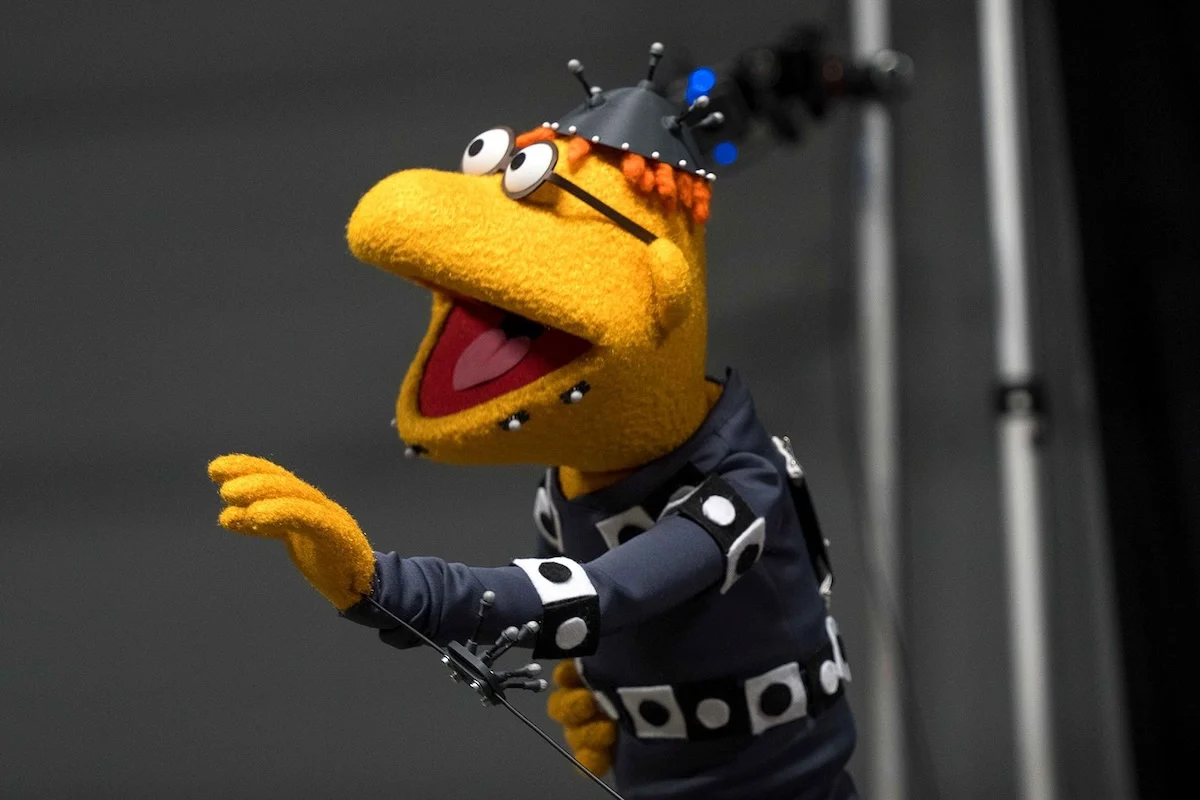
Rock 'n' Roller Coaster reopened on May 26 re-themed to the Muppets, and its pre-show has an animatronic Scooter trying to keep the band on schedule. The way Imagineering built it is the fun part: they put the actual Scooter Muppet in a motion-capture suit and recorded his performance, then used that data to program a figure that moves and emotes like the puppet does.
Motion-capturing a hand puppet is a smart fix for a real problem. Muppet performance is specific, and hand-animating a figure to match it usually lands in the uncanny gap. Capturing the puppeteer's own timing keeps the mannerisms intact. Penguin animatronics fill out the scene as recording engineers.
Garner Holt gave the Maker Week keynote at UC Riverside

On April 20, animatronics pioneer Garner Holt gave the keynote that opened UC Riverside's Maker Week 2026. Holt started building animatronic figures as a high schooler in 1977 and turned it into Garner Holt Productions, whose figures run at Disneyland, Knott's Berry Farm, and Chuck E. Cheese, among others.
The talk was aimed at students, walking through how a teenage obsession became an industry company. Maker Week itself is a hands-on program covering sketching, electronics, 3D printing, and storytelling — the same stack a lot of us came up through on the way into this work.