Disneyland’s Pirates of the Caribbean reopens with the first projection-mapped animatronic face
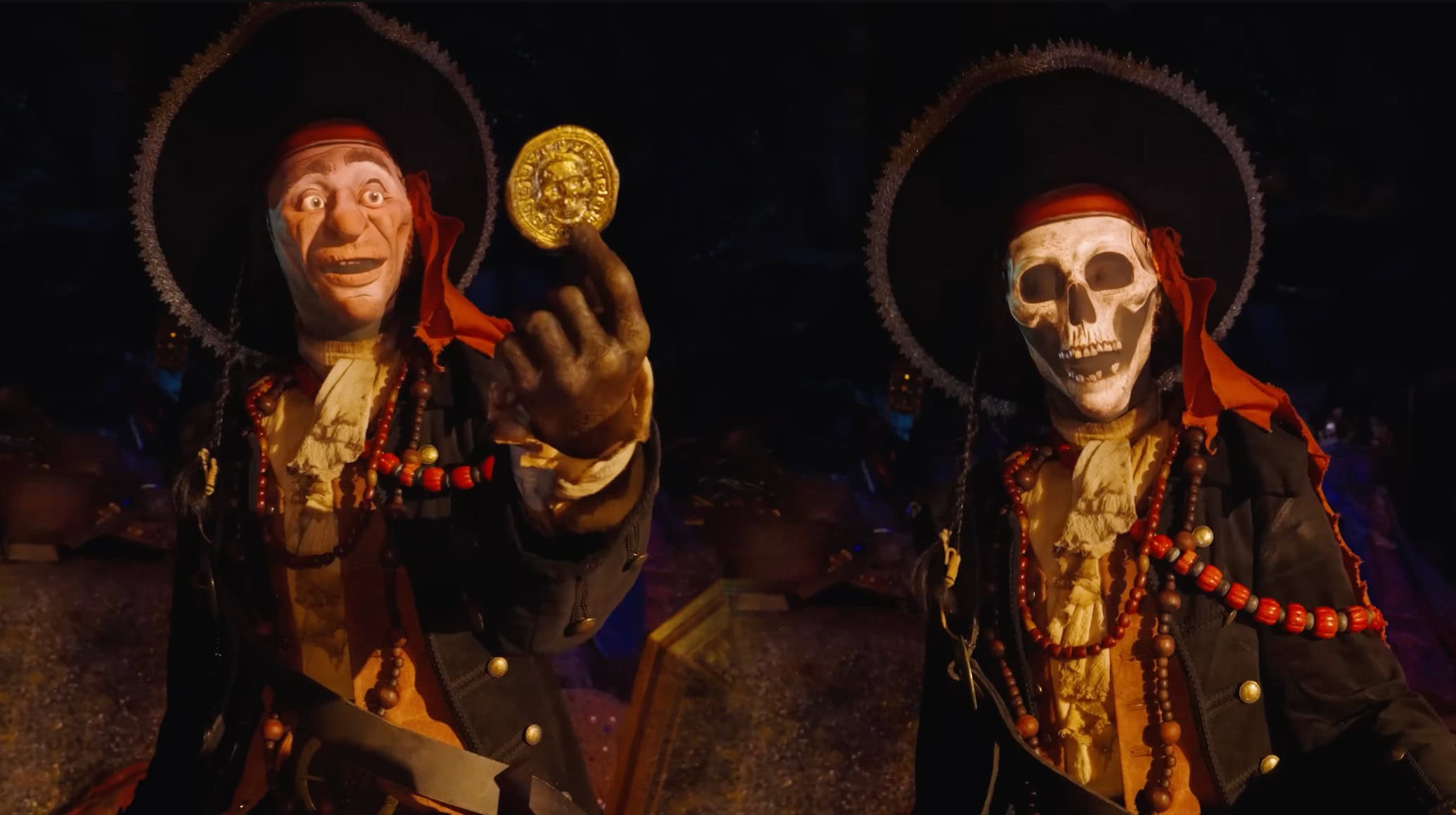
Pirates of the Caribbean reopened at Disneyland on June 26 after a roughly two-month refurbishment, and the treasure-room pirate became Disney’s first Audio-Animatronic to use a real-time projected face instead of a sculpted, mechanically animated head. The head is a smooth 3D-printed shell that acts as a screen, and projectors throw a rendered image onto it, driven by Unreal Engine through Disney’s partnership with Epic Games. Over the scene the pirate shifts from a living man to a skeleton as the curse plays out.
The engineering is built around keeping the projected image locked to a moving target. UV-reactive markers hidden in the pirate’s bandanna let the system calibrate itself at night and recover if a motor drifts, and Disney is using a patented alignment method to hold the projection in registration. Because the ride runs over water, the installation uses redundant projectors and computers in an active-plus-backup configuration.
The body still uses conventional animatronic motion for gestures, while the face carries expressions a mechanical head struggles with, like dread or visible decay. For anyone doing this kind of fabrication work, the debut is the proof point behind the projection-mapping patents Disney and Universal have been filing. One figure can be re-skinned or re-themed in software rather than resculpted.
A Bloomberg feature reveals Imagineering’s untethered robots, from a hovering food cart to swimming dolphins
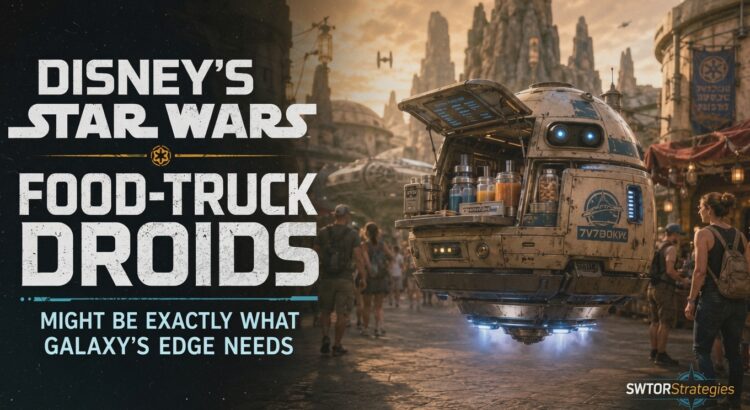
A Bloomberg feature published June 26 laid out several untethered robots Walt Disney Imagineering has in development, moving characters off fixed floors and tracks. One is a hovering droid built as a Star Wars food cart for Galaxy’s Edge, worked on with Jon Favreau’s team and inspired by the food truck in The Mandalorian and Grogu. It levitates through the land, reacts to what a guest orders, and performs a short routine during the sale.
The same program includes a group of robotic dolphins meant to swim together and run synchronized water shows, extending the untethered, sensor-driven approach across multiple figures. It sits alongside the walking BDX droids already in the parks. Kyle Laughlin, who leads R&D at Imagineering, framed the effort around getting characters into shared space with guests, and said part of the point with the food cart is learning how a robot can present and sell a product.
Disney planned to show the droid at its D23 event in August, with a possible Disneyland test later in the year. Imagineering is pairing the robotics with older puppetry and marionette techniques to keep the characters convincing up close.