A compact cycloidal robot actuator hits only 7 Nm of its 20 Nm target on the bench
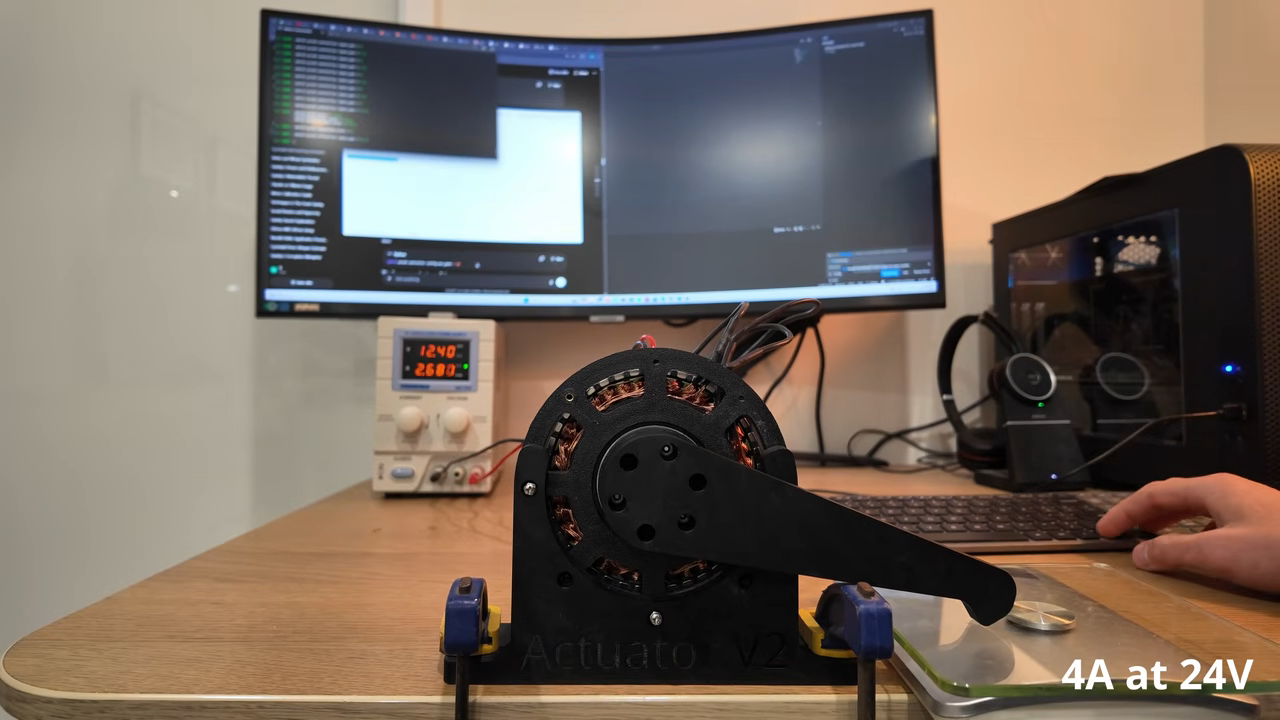
Hardware builder Brandon Lai posted build notes and test results for the second version of a compact robot actuator he is developing on the way to a humanoid. The design pairs a hand-wound stator with a cycloidal reduction gearbox instead of the planetary gearing common in hobby servos, using CNC-machined and 3D-printed parts. Lai set a goal of 40 to 60 rpm at 20 Nm of torque, sustained for an hour of continuous operation.
In testing the unit produced only about 7 Nm, capped by the current limit of his benchtop power supply rather than the motor windings. Loose tolerances in the cycloidal stage introduced noticeable backlash, and the parts count pushed the cost to roughly $400, over his budget. He has published the CAD files and plans another revision.
The write-up is a useful data point on how hard compact high-torque drives are to build outside a professional lab, which is the same class of actuator that moves limbs and heads in modern character robots.
A Technical University of Munich survey maps twenty years of hyper-realistic robot faces
Naoya Itatani and Melissa Zavaglia at the Munich Institute of Robotics and Machine Intelligence, part of the Technical University of Munich, published a review of highly anthropomorphic robot heads covering roughly twenty years of work, in the Journal of Intelligent & Robotic Systems. The survey connects the engineering of facial mechanisms to the psychology of how people actually read those faces.
On the hardware side the authors trace actuation from servo motors and pneumatic systems toward newer soft actuators and flexible electronics, and they examine how designs implement the Facial Action Coding System to drive discrete muscle-like movements. Cited platforms include Geminoid F, SAYA, iCub, and Affetto.
The review also works through the uncanny valley and the tradeoff between lifelike facial detail and reliable, repeatable motion, the same constraint that shapes how animatronic and character-robot faces get built.